Azure Well-Architected Framework: five pillars, design principles, and architectural trade-offs
Design workloads that balance Reliability, Security, Cost Optimization, Operational Excellence, and Performance Efficiency while making risk, cost, and capability trade-offs explicit.
Suggested study time: 35 minutes • Intermediate • Complete original rewrite with a concise summary for every topic
By João Ricardo Dutra••Complete original content
1. Architecture must earn confidence
A cloud solution is judged by more than its features. Customers expect their data to remain protected, traffic spikes to be absorbed, component failures to be contained, and resources to deliver value without waste. The Azure Well-Architected Framework gives architects a repeatable way to design, build, review, and continuously improve those qualities.
This chapter assumes experience with core infrastructure such as compute, networking, and storage, plus experience using technology to solve business problems. Its goal is to explain the framework pillars and the principles that create a durable architectural foundation.
Topic summary
A successful cloud architecture must satisfy functional requirements while also protecting data, handling demand, recovering from failure, and using resources responsibly.
2. The solution architect balances business and technology
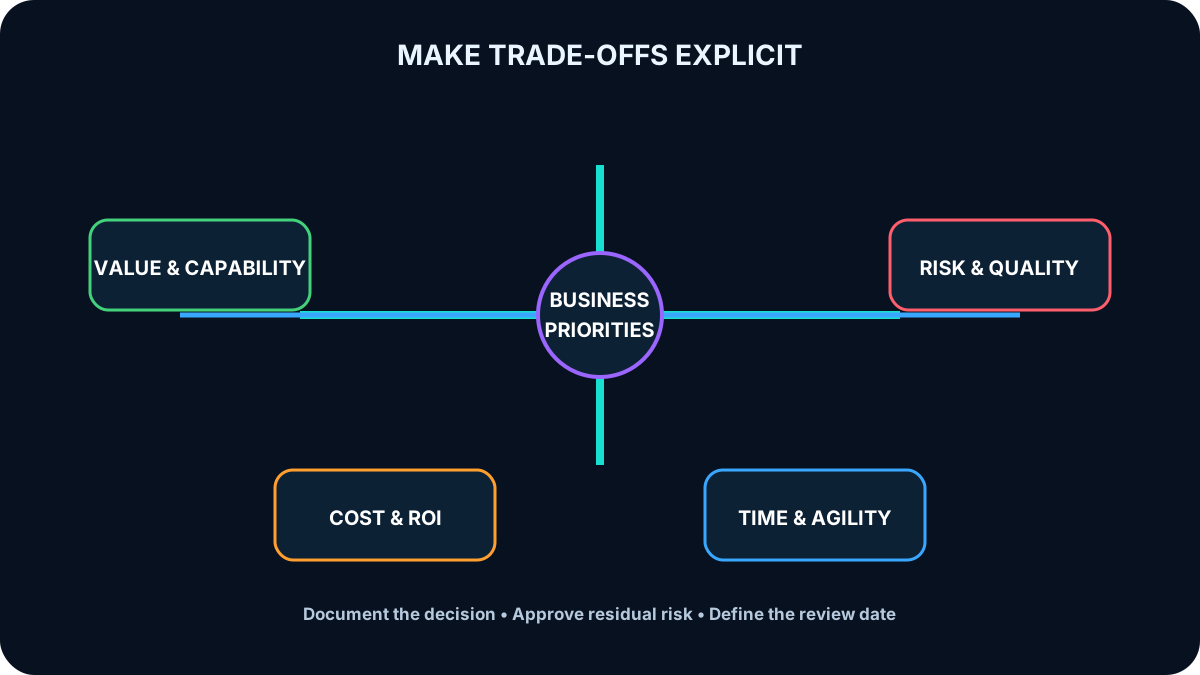
Solution architecture covers planning, design, implementation, and ongoing improvement. The architect translates business requirements into technical capabilities and balances risk, cost, delivery speed, operational agility, and capability across the system. No single design is correct for every organization because priorities and constraints differ.
Topic summary
The architect turns business intent into technical decisions and explicitly balances risk, cost, capability, and delivery constraints.
3. What the Azure Well-Architected Framework provides
The framework is a set of quality-driven tenets, decision points, and review guidance for Azure workloads. Its recommendations are broad enough to apply across technologies and workload types, but implementation still depends on business requirements and organizational constraints. It is not a one-time certification of a design: teams revisit it as workloads, traffic, threats, costs, and priorities change.
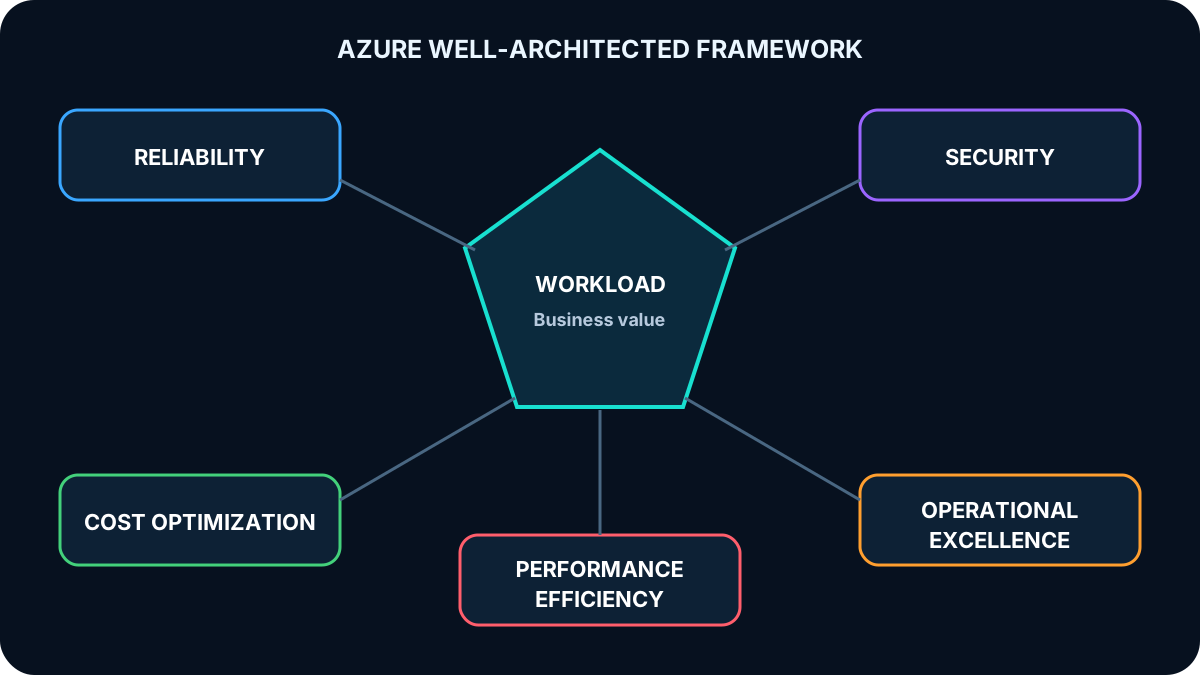
The five pillars are evaluated together because every major architectural decision can improve one quality while affecting another.
Topic summary
Well-Architected guidance provides a shared vocabulary and review method for improving workload quality throughout its lifecycle.
4. Reliability: continue, detect, recover
Reliability addresses resiliency, availability, and recovery. A reliable workload anticipates failure at every layer, detects unhealthy conditions, contains the effect, and restores service within the time and quality stakeholders expect. Design for business requirements, simplify where possible, remove single points of failure, test recovery paths, and measure whether recovery objectives are achieved.
Topic summary
Reliability means the workload remains useful during disruption and can detect, manage, and recover from failures within agreed objectives.
5. Security: protect confidentiality, integrity, and availability
Security incidents can damage reputation, operations, and finances. A secure workload uses a Zero Trust approach, assumes compromise, verifies explicitly, applies least privilege, and limits blast radius. The CIA triad anchors the design: confidentiality prevents unauthorized disclosure, integrity protects correctness, and availability keeps authorized access possible.
Topic summary
Security makes the workload resilient to attack through Zero Trust, layered controls, least privilege, and protection of the CIA triad.
6. Cost Optimization: maximize value, not merely minimize spend
Cost Optimization connects architecture to return on investment and financial constraints. Teams model cost, set budgets, identify priority areas, match service tiers to actual needs, remove waste, and continuously compare spending with business value. The cheapest component is not always the most cost-effective if it raises operational effort, risk, or lost-revenue exposure.
Topic summary
Cost optimization allocates budget intentionally and maximizes the value returned by every resource while respecting risk and quality targets.
7. Operational Excellence: make quality repeatable
Operational Excellence focuses on responsible development and operations. DevOps culture, standardized workflows, observability, automation, release management, safe deployment practices, and cohesive teams reduce process variance and human error. The objective is not simply to keep the workload running, but to make changes predictable, measurable, and recoverable.
Topic summary
Operational excellence uses people, standards, automation, observability, and safe releases to deliver consistent workload quality.
8. Performance Efficiency: meet demand without waste
Performance Efficiency ensures a workload accomplishes its purpose within acceptable timeframes. Capacity must respond when demand grows and contract when demand falls. Architects define realistic performance targets, choose appropriate scaling models, monitor bottlenecks, test expected and exceptional load, and optimize compute, data, networking, and storage over time.
Topic summary
Performance efficiency matches capacity to demand, preserves the user experience under load, and avoids idle capacity when demand falls.
An ideal workload would maximize every pillar simultaneously, but additional resilience, stronger isolation, richer telemetry, or higher performance can increase cost, delivery time, and operational complexity. Conversely, aggressive savings can reduce redundancy or performance headroom. The architect must document which compromises are acceptable, who approved them, what risks remain, and when the decision will be reviewed.
Trade-offs are intentional decisions, not accidental side effects. Business criticality determines which qualities receive priority.
Topic summary
Good architecture does not eliminate trade-offs; it makes them visible, evidence-based, approved, and reversible where practical.
10. Map each pillar to its primary concern
Knowledge-check mapping.
Pillar
Primary focus
Reliability
Resiliency, availability, and recoverability
Security
CIA triad, Zero Trust, attack resistance, and damage limitation
Cost Optimization
ROI, financial constraints, spending patterns, and resource value
Operational Excellence
Workload quality through standardized and observable workflows
Performance Efficiency
Ability to adapt capacity and performance to changing demand
Topic summary
For the assessment, associate recovery with Reliability, protection with Security, ROI with Cost Optimization, standardized workflows with Operational Excellence, and changing demand with Performance Efficiency.
11. Apply the framework as a continuous design loop
Define functional and nonfunctional business requirements and their priority.
Review the design through all five pillars and record assumptions, risks, and trade-offs.
Choose Azure services and configurations that support the intended outcomes.
Validate with tests, telemetry, failure exercises, security reviews, and cost data.
Reassess after production learning, business change, new threats, or platform evolution.
Topic summary
The framework is most useful as an iterative loop that turns requirements into decisions, evidence, production learning, and the next improvement.
12. Final review and official references
Architecture is the foundation of the application. Using all five pillars creates a stronger basis for present requirements and future change, but the framework is guidance rather than an exhaustive design specification. Continue into the pillar checklists, workload guides, service guides, design guides, and the Microsoft Azure Well-Architected Review in the Azure Architecture Center.
The five pillars provide the durable foundation; detailed checklists, workload guidance, service guidance, and recurring reviews turn them into implementation practice.