Build financial discipline, maximize resource value, select favorable rates, and continuously improve workload return on investment without weakening required qualities.
Suggested study time: 86 minutes • Intermediate • Complete original rewrite with a concise summary for every topic
By João Ricardo Dutra••Complete original content
1. Optimize cost for business value, not merely a lower bill
The Cost Optimization pillar of Azure Well-Architected Framework asks whether a workload produces sufficient return on investment (ROI). Architecture must support business outcomes within financial constraints: confirm that the budget can fund the goal, understand where application and operational spending goes, and obtain more value from resources already purchased.
A cost-optimized workload is not automatically the cheapest workload. Cutting protection, scalability, resilience, or operability can transfer expense into outages, security events, rework, and reputation damage. Good design makes explicit tradeoffs and protects mandatory functional and nonfunctional requirements.
Cost is optimized when financial choices preserve required workload outcomes.
Topic summary
Optimize ROI across the workload lifecycle while keeping required security, reliability, performance, and operability.
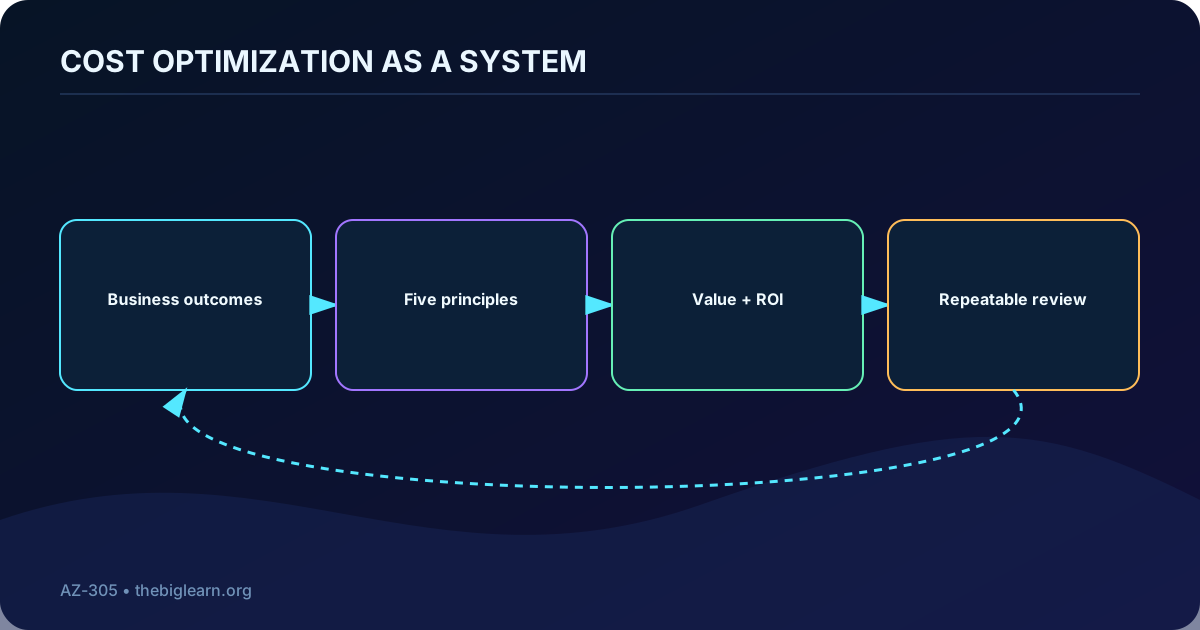
2. Apply the five Cost Optimization principles as a system
Cost Optimization principles and their purpose.
Principle
Purpose
Develop cost-management discipline
Create ownership, a cost model, a realistic budget, and transparent communication.
Design with a cost-efficiency mindset
Evaluate full cost and favor choices that deliver the required outcome with strong ROI.
Design for usage optimization
Right-size, use paid features, avoid idle capacity, and scale with demand.
Design for rate optimization
Consolidate safely and select discounts or billing models that match predictable use.
Monitor and optimize over time
Track spend, tune the workload, remove waste, and repeat the process.
The principles reinforce one another. A cost model informs guardrails; usage data informs commitments; monitoring reveals whether a supposedly cheaper architecture truly improves ROI.
Topic summary
Treat discipline, design, usage, rates, and continuous monitoring as one feedback system.
3. Build cost-management discipline with Contoso Events
A fictional trade-show company builds a .NET mobile ticketing application on Azure with . Demand can spike, the team wants to start small, and no reliable funding request is possible until expected infrastructure, support, implementation, people, and revenue are modeled.
Cost awareness belongs to architects, engineers, product owners, finance, and operations. Align the workload with organizational FinOps practices, resource organization, financial policies, reporting scopes, and accountability.
Topic summary
Make financial responsibility part of normal architecture and product decisions rather than a finance-only activity.
4. Develop a cost model for TCO and change scenarios
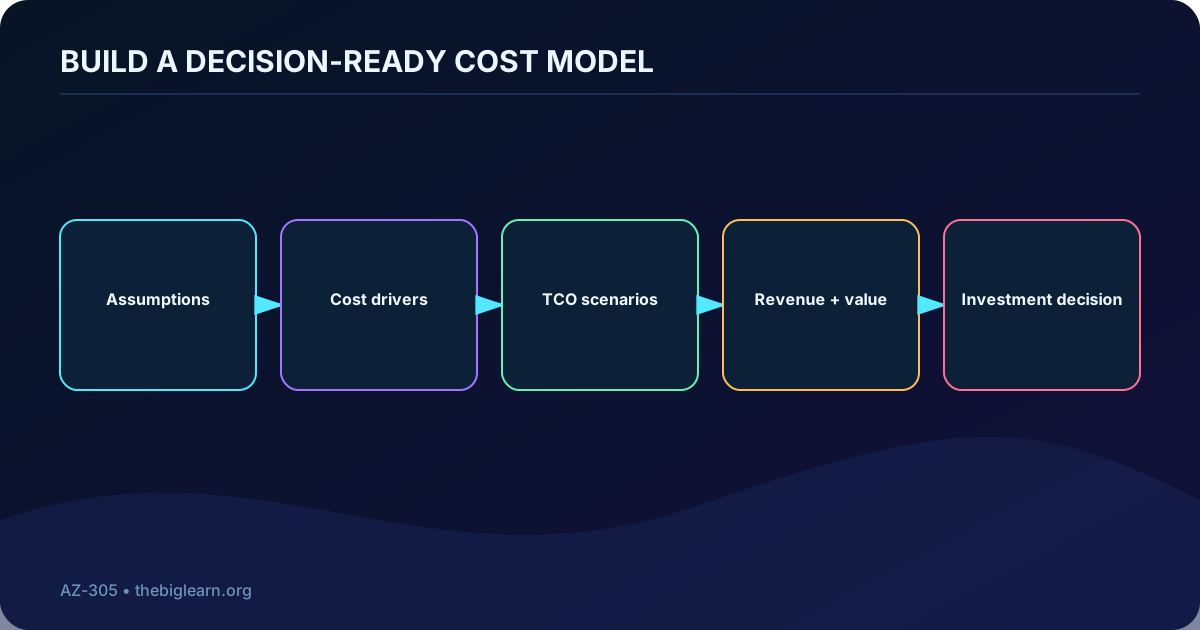
A cost model segments expenses and estimates total cost of ownership (TCO). Include infrastructure, licenses, support, implementation, training, operations, data transfer, expected growth, revenue, and lifecycle changes. Identify the drivers that make the model rise or fall.
Contoso evaluates resource configurations for several traffic levels, combines rough platform and team costs with expected revenue, and keeps refining the model. To understand the effect of doubling users, run that variation through the model; do not assume spend doubles or simply request more money. In the knowledge check, the cost model is the modeling technique used to forecast TCO.
A living cost model turns architectural variations into financial forecasts.
Topic summary
Model the complete cost structure and test growth, shrinkage, and design alternatives before committing.
5. Set a realistic and adaptable budget
The budget establishes the workload financial boundary. It must cover required features, support, training, implementation, operations, and reasonable growth. Connect it to spending thresholds and alerts at useful scopes, while leaving a justified buffer for uncertainty.
The ticketing team converts its cost model into a stakeholder-approved target. As implementation evidence improves, it can renegotiate assumptions without treating the budget as optional. A realistic budget—not training, a model alone, or monitoring alone—sets the financial limit in the source assessment.
Topic summary
Use the cost model to establish an achievable budget, thresholds, alerts, and a controlled mechanism for revision.
6. Communicate cost insights upstream
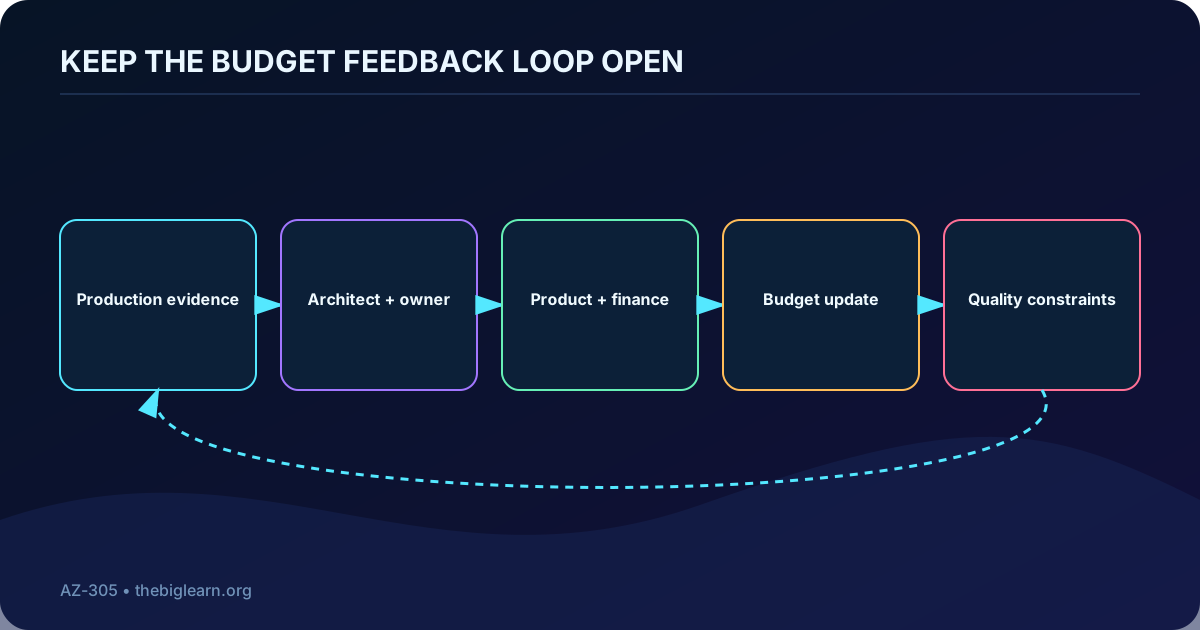
Production evidence can reveal a less expensive way to satisfy the same need. Architects and workload teams should raise those findings to product and finance stakeholders, explain benefits and tradeoffs, and seek an explicit decision.
Contoso treats the budget as if it were its own money and proposes changes without sacrificing security, reliability, or performance. Stakeholders approve the improved approach. Silent underspending is not optimization when the organization could redirect value.
Transparent feedback connects real usage to budget and roadmap choices.
Topic summary
Escalate evidence-backed savings opportunities and make financial tradeoffs visible to decision makers.
7. Adopt a cost-efficiency mindset for the Contoso WMS
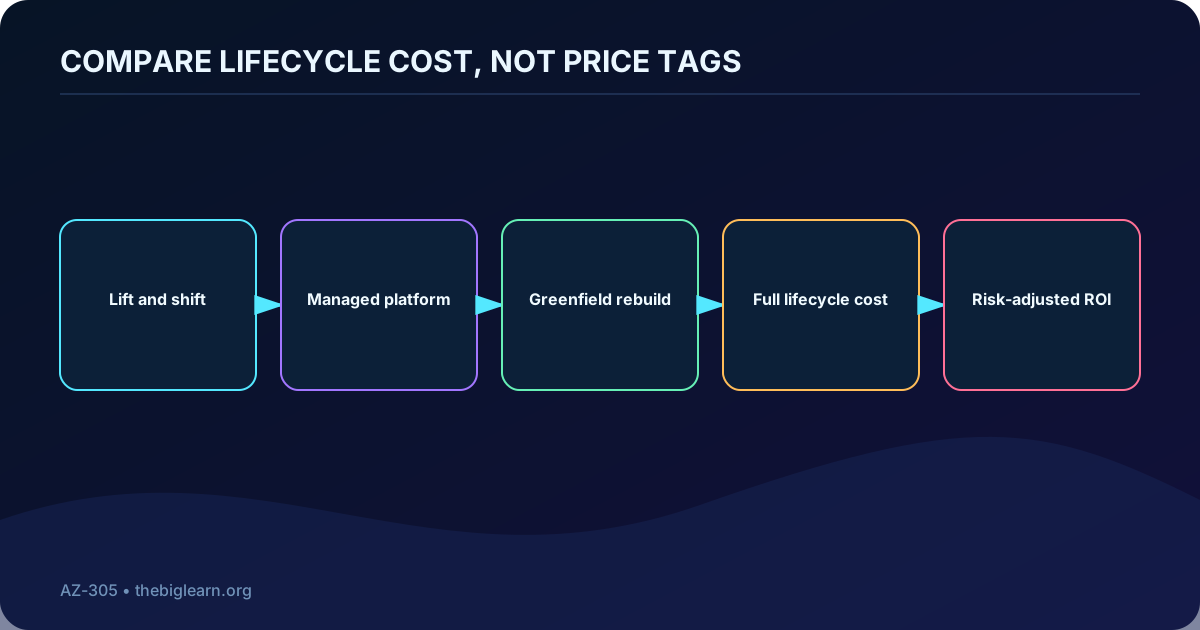
A fictional manufacturer runs a .NET warehouse management system on IIS and SQL Server across four South American warehouses. During cloud migration, engineers consider lift-and-shift versus a greenfield microservices rewrite on .
Cost efficiency means spending only what is necessary for the required return. Build-versus-buy, platform familiarity, licensing, migration, training, technical debt, operations, and change management all affect ROI.
Topic summary
Evaluate migration choices by full business value, delivery risk, skills, and lifecycle cost—not technical novelty.
8. Measure the full cost and impact on ROI
Total cost includes acquisition and consumption plus staff time, new skills, rewriting, testing, deployment, support, licenses, data, change management, and ongoing operation. The design must remain within functional and nonfunctional boundaries and allow predicted evolution.
The team avoids an unnecessary rewrite and chooses the more familiar Azure path, while addressing selected technical debt. The knowledge-check factor is impact on ROI; marketing launch cost, a budget forecast alone, or developer salaries in isolation do not express the architectural measure requested.
ROI includes delivery and operational consequences, not only the Azure invoice.
Topic summary
Compare alternatives using complete lifecycle cost, risk, required qualities, and expected return.
9. Prefer the simplest migration that meets the outcome
A cloud move does not require a wholesale redesign. Reusing familiar patterns can reduce training, rework, and schedule risk. Modernize where technical debt or business value justifies it, and create a baseline before making later improvements.
Azure preserves Windows IIS compatibility with limited change. The team can improve after migration from a measured state instead of paying for complexity before it proves useful.
Topic summary
Choose the least disruptive architecture that meets requirements and modernize incrementally when the ROI is clear.
10. Refine the design around high-value services and existing investments
Prioritize services that reduce overall cost, avoid extra investment, or preserve functionality. Account for runtime, operational effort, criticality, licensing, and productivity. Existing investments can be valuable when they remain supportable.
Contoso moves web components to and retains GitHub Actions self-hosted runners. It hosts those runners on that can scale to zero when idle. In the source assessment, the preferred refinement is a service that reduces the workload total cost.
Topic summary
Favor services and investments that reduce total cost without compromising required behavior.
11. Add architectural cost guardrails
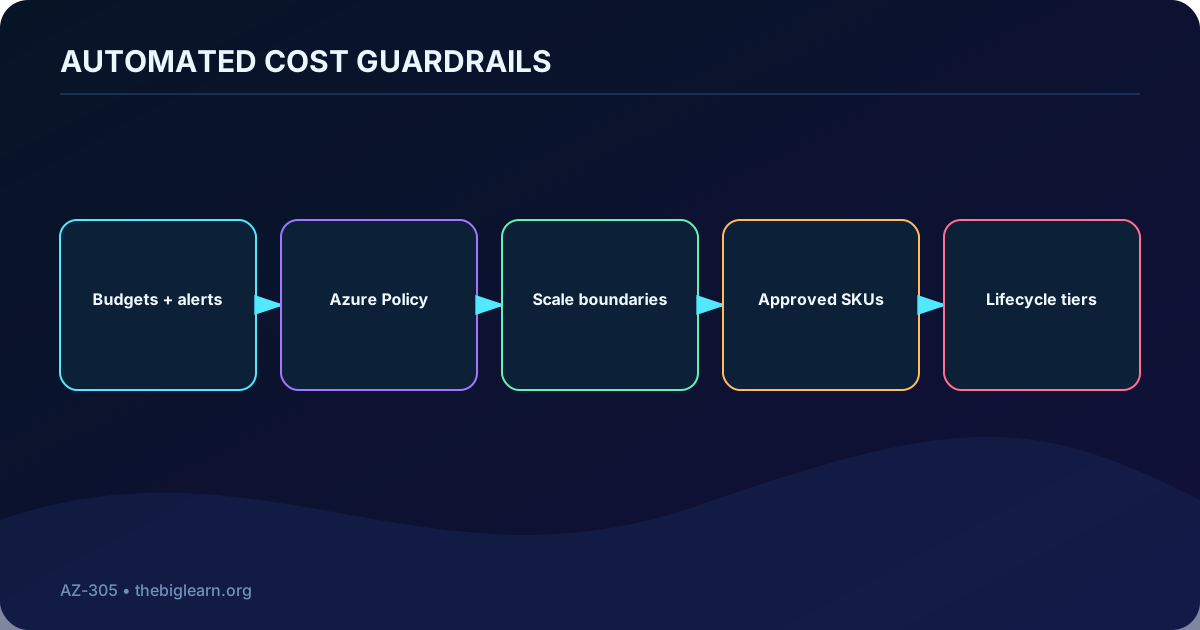
Guardrails prevent accidental overspend without requiring constant manual intervention. Use budgets and alerts in , scale limits, , approved SKUs, quotas, ownership tags, and storage lifecycle automation.
The WMS team caps scaling, denies selected expensive virtual-machine SKUs with , and moves aging data to Cold or Archive tiers. The assessment answer is enforcing cost-efficient SKUs; manual shutdown and peak-sized buffers are weaker controls.
Translate financial limits into automated policy, scaling, quota, alerting, and lifecycle controls.
12. Optimize usage in the Contoso University integration
A university runs a commercial course system whose database uses . A Python durable function on an old Standard plan uses Azure to synchronize data nightly with a cloud education API.
Usage optimization asks whether each paid feature and unit of capacity creates value. Recheck the plan after the original website or workload purpose changes.
Topic summary
Review service tiers and capacity whenever workload purpose, demand, or platform capabilities change.
13. Use the full value of resources and right-size them
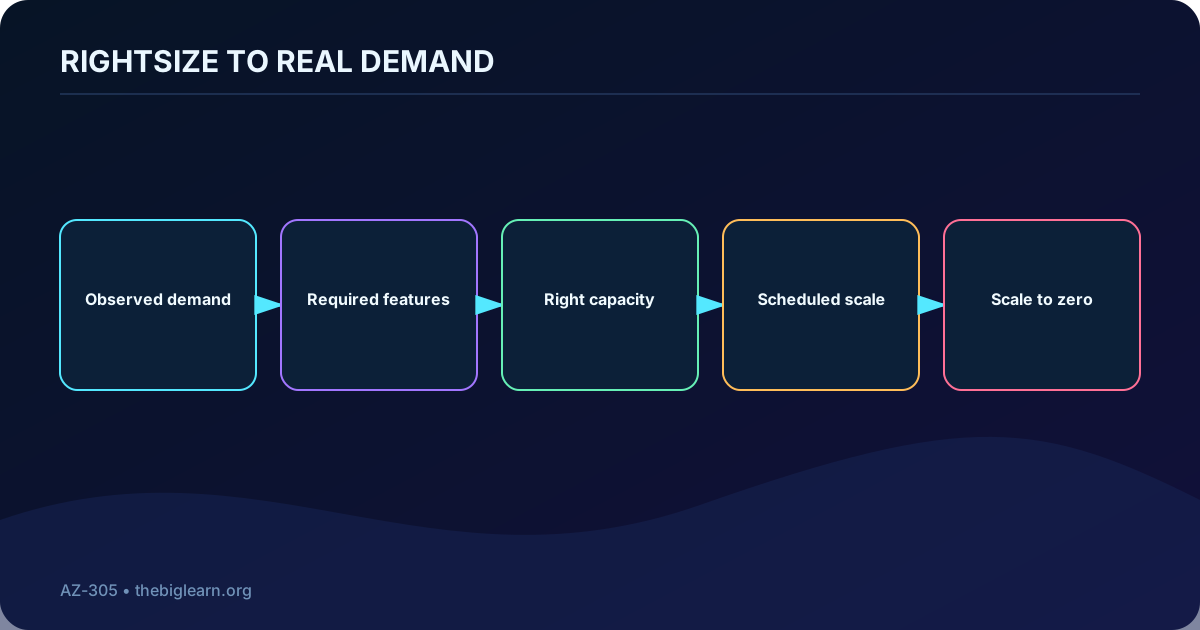
Inventory the performance, security, reliability, and scaling capabilities included in every SKU. Use those capabilities, or move to a simpler tier that still satisfies requirements. Right-size databases, compute, storage, and support rather than preserving historical selections.
Contoso moves the durable function to a lower tier and confirms that the MySQL SKU is appropriate. The reason is to reduce cost while retaining required functionality, not to add languages, performance, or regions.
Right-sizing removes unused capacity without violating requirements.
Topic summary
Match each SKU to measured demand and required features, and revisit the decision regularly.
14. Optimize high availability against tested recovery targets
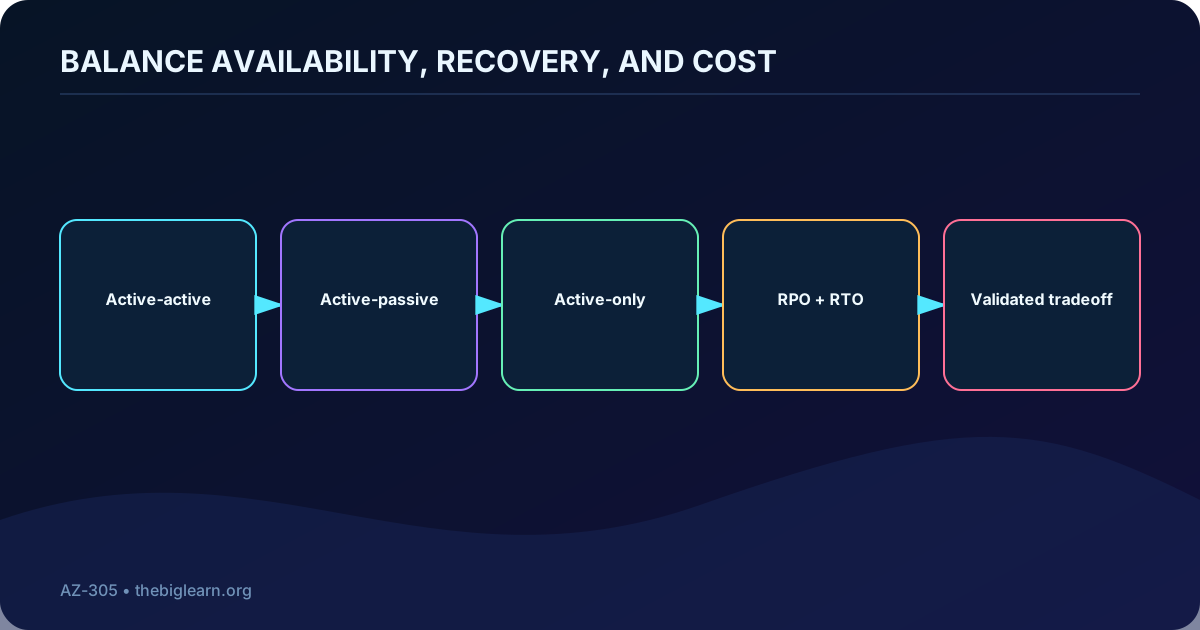
Active-passive deployments can leave paid standby capacity idle. If resources are already funded, active-active can use them for load leveling or bursts. If tested backup recovery meets the RPO and RTO, an active-only design might remove standby cost altogether.
Flexible Server had same-zone high availability, but the university accepts a 12-hour RPO and three-hour daytime RTO. Tests prove restoration can meet both, so the standby is removed and the disaster-recovery plan is updated. The pattern to avoid when paid resources sit unused is active-passive.
Availability architecture should be justified by recovery evidence and business impact.
Topic summary
Pay for standby only when its risk reduction is required; prove alternatives through recovery tests.
15. Scale capacity with demand
Avoid provisioning peak capacity for every hour. Scale up when demand arrives and down when it falls; consider services that can pause or scale to zero. Define minimums, maximums, schedules, metrics, cooldowns, and alerts.
The nightly integration scales down its plan during off-hours and evaluates or the Consumption plan for scale-to-zero behavior. The source answer is the off-hours scale-down, which reduces idle compute without affecting the nightly run.
Topic summary
Align active capacity with actual usage and monitor scaling rules so savings do not harm service objectives.
16. Optimize rates in the Contoso BI API platform
A business-intelligence team operates GraphQL APIs through on the Consumption tier. Three clusters support Windows and Linux API workloads. The functional system works, but duplicated infrastructure and consumption pricing create avoidable cost.
Rate optimization seeks a lower unit price without removing required features or redesigning unnecessarily. Consolidation, commitments, licensing, and fixed-price tiers are evaluated only after demand becomes understandable.
Topic summary
Separate usage optimization from rate optimization: first know what is needed, then reduce its unit cost.
17. Consolidate infrastructure where boundaries permit
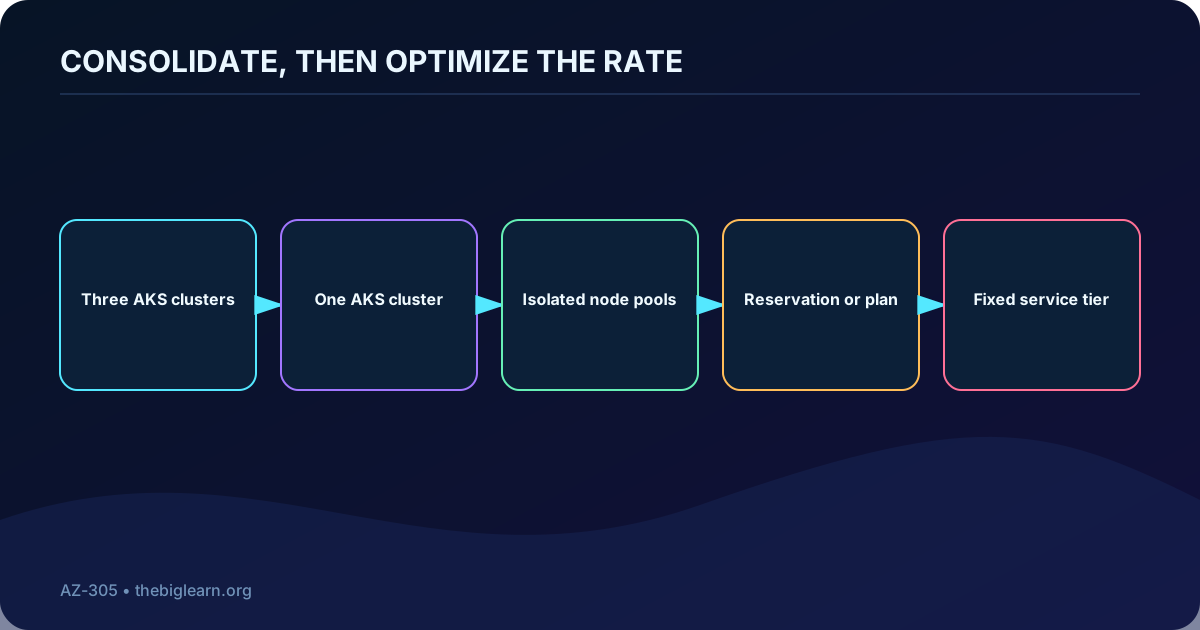
Packing compatible workloads into fewer systems can reduce nodes, patching, monitoring, and operational effort. Preserve isolation, security, availability, noisy-neighbor controls, and failure boundaries.
After testing, Contoso combines three clusters into one with three user node pools, reduces nine system nodes to four, and has only one cluster to maintain. Reduced patching and operational overhead is the assessment benefit.
Safe consolidation reduces both infrastructure and operational unit cost.
Topic summary
Consolidate compatible resources only after validating security, performance, availability, and isolation.
18. Use reservations and commitment discounts deliberately
Predictable long-term usage can benefit from Azure Reservations or Azure savings plans. Reservations are narrower and can offer deeper savings for stable resource, size, and region needs; savings plans exchange an hourly commitment for broader eligible compute flexibility. Neither changes runtime state.
Because the platform will remain and its baseline node SKUs are predictable, Contoso buys a three-year reservation for system nodes and minimum user-node instances. Coordinate forecasts with licensing and procurement, size commitments conservatively, and monitor utilization so unused commitments do not become waste.
Topic summary
Commit only the stable baseline, keep variable growth flexible, and continuously verify benefit utilization.
19. Choose fixed-price billing when utilization is predictable
When a service runs consistently at moderate or high use, a fixed tier can cost less than consumption billing and may add valuable capabilities. Compare actual and forecast usage, break-even points, included features, minimums, and elasticity.
Contoso finds the Standard tier cheaper for its global, sustained pattern and gains inbound private-endpoint support. The correct source answer combines better cost with private endpoints; Consumption supports global use, and Standard does not imply unlimited scaling.
Topic summary
Move to fixed pricing when measured utilization and required features beat the consumption alternative.
20. Monitor costs in the Contoso Air workload
A fictional baggage-tracking platform runs in two US regions on with and . Reliability improvements will raise future spend, so the team first looks for waste before asking for a larger budget.
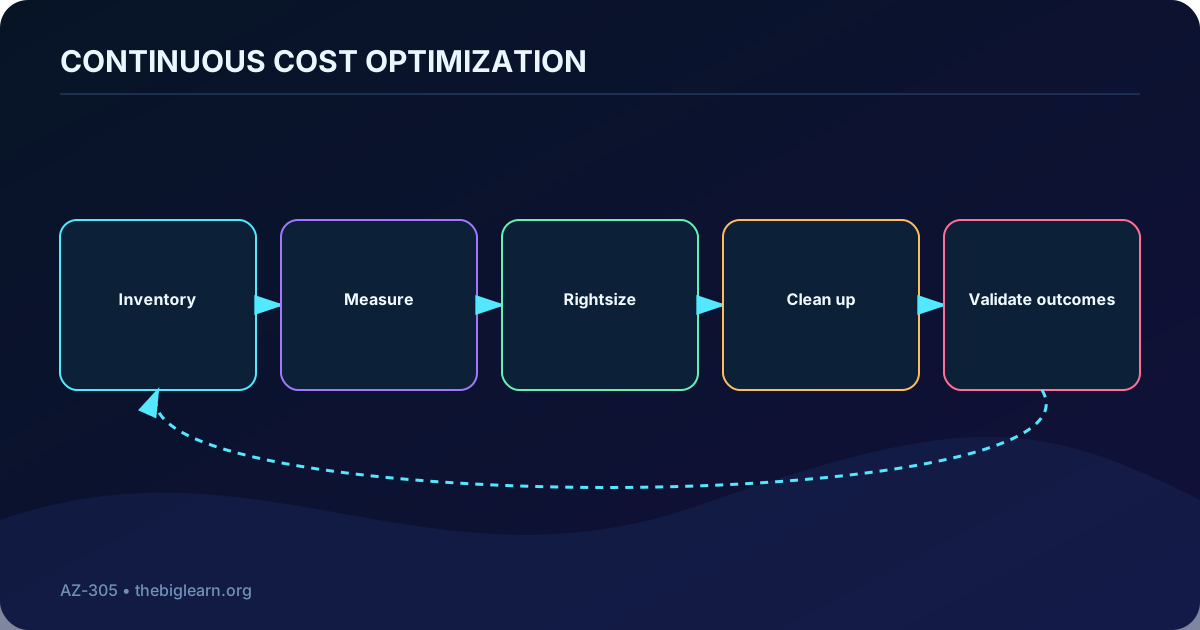
Cost optimization is continuous because architecture, demand, teams, cloud services, agreements, and business priorities change. ROI must be observed as a trend rather than assumed from the launch plan.
Topic summary
Use production financial evidence to fund new priorities and revisit earlier architecture assumptions.
21. Track, classify, and allocate spending
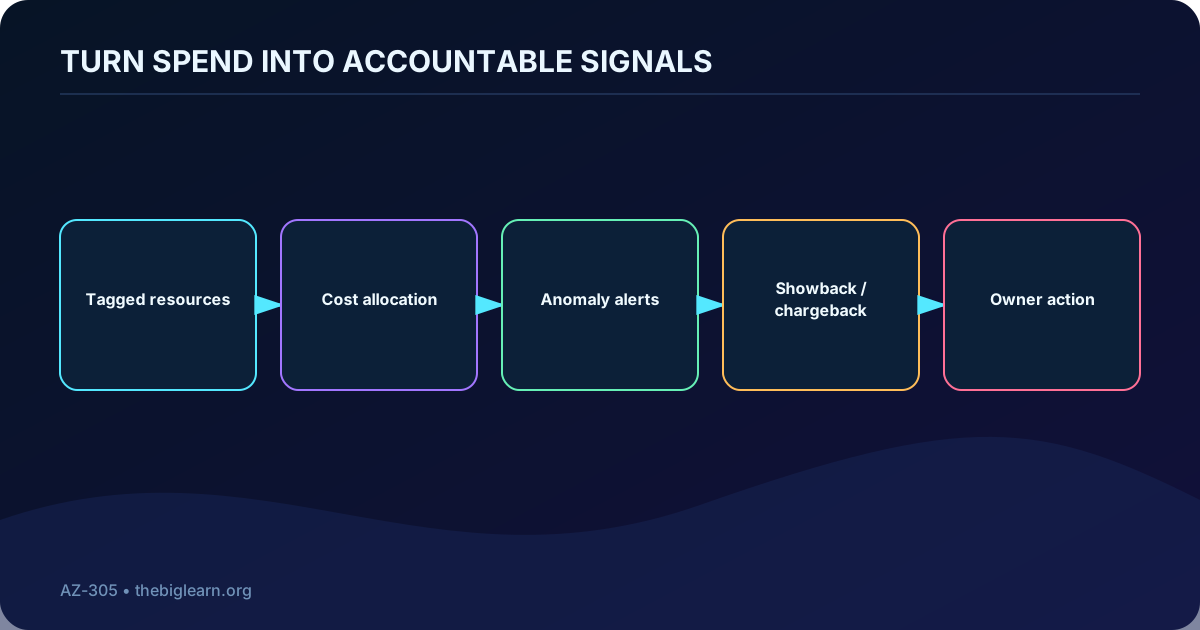
Use to break down cost by resource, resource group, subscription, service, tag, team, and environment. Tag ownership and purpose, create alerts, and support showback or chargeback so stakeholders understand consumption.
Contoso finds obsolete build VMs, old Azure data in an expensive tier, and unused consulting hours in a support contract. It deletes the VMs, moves data to Archive, uses the contracted services, and adds recurring cost review. Azure storage cost is the optimizable Azure expense in the assessment.
Financial observability exposes waste and supports accountable investment.
Topic summary
Make every material cost attributable, reviewable, and connected to an owner and business purpose.
22. Tune architecture, code, and flows continuously
Review performance, billing, feature use, and operational metrics together. Adjust architecture, resources, code, and workflows when ROI evidence changes, while preserving functional and nonfunctional requirements.
Contoso reduces resources assigned to low-priority flows and adopts queue-based load leveling instead of provisioning for peaks. It also replaces custom authentication code with a platform capability already included in the chosen SKU. Functional and nonfunctional requirements are constraints, not candidates to discard. The queue-based approach is the source answer for reducing compute without harming performance.
Topic summary
Use measured ROI to simplify flows and code, but never optimize by ignoring mandatory requirements.
23. Remove cloud clutter through a repeatable hygiene process
Temporary environments, inactive services, forgotten data, and oversized SKUs quietly accumulate. Tag expiration dates, review utilization monthly, automate lifecycle policies, and require owners to renew or remove temporary assets.
Contoso decommissions unused node pools, removes inactive , consolidates containers, archives or deletes historical baggage data by age and access pattern, and downgrades overprovisioned SKUs. The savings also reduce operational complexity.
Cost optimization remains effective only when cleanup and reassessment repeat.
Topic summary
Institutionalize expiration, lifecycle, rightsizing, and cleanup so yesterday’s useful resource does not become tomorrow’s waste.
24. Review the complete Cost Optimization decision
Model TCO, revenue, drivers, and uncertainty before setting the budget.
Communicate production evidence and preserve mandatory workload qualities.
Choose the simplest architecture that meets the outcome and apply cost guardrails.
Right-size, use paid features, validate availability, and scale with demand.
Consolidate safely and apply reservations, savings plans, or fixed tiers to predictable baselines.
Track allocation, tune architecture, and remove unused resources through a repeatable process.
For AZ-305, connect every cost choice to demand, financial scope, service objective, risk, break-even point, owner, measurement, and reversal plan. A lower price is not an architecture recommendation until its tradeoffs are explicit.