Unify development and operations, standardize delivery, turn telemetry into decisions, automate deliberately, and release changes with controlled risk.
Suggested study time: 90 minutes • Intermediate • Complete original rewrite with a concise summary for every topic
By João Ricardo Dutra••Complete original content
1. Make Operational Excellence part of architecture
The Operational Excellence pillar of Azure Well-Architected Framework connects responsible development with dependable day-to-day operation. Standardized workflows, team cohesion, monitoring, release management, and automation reduce process variation, human error, and customer disruption.
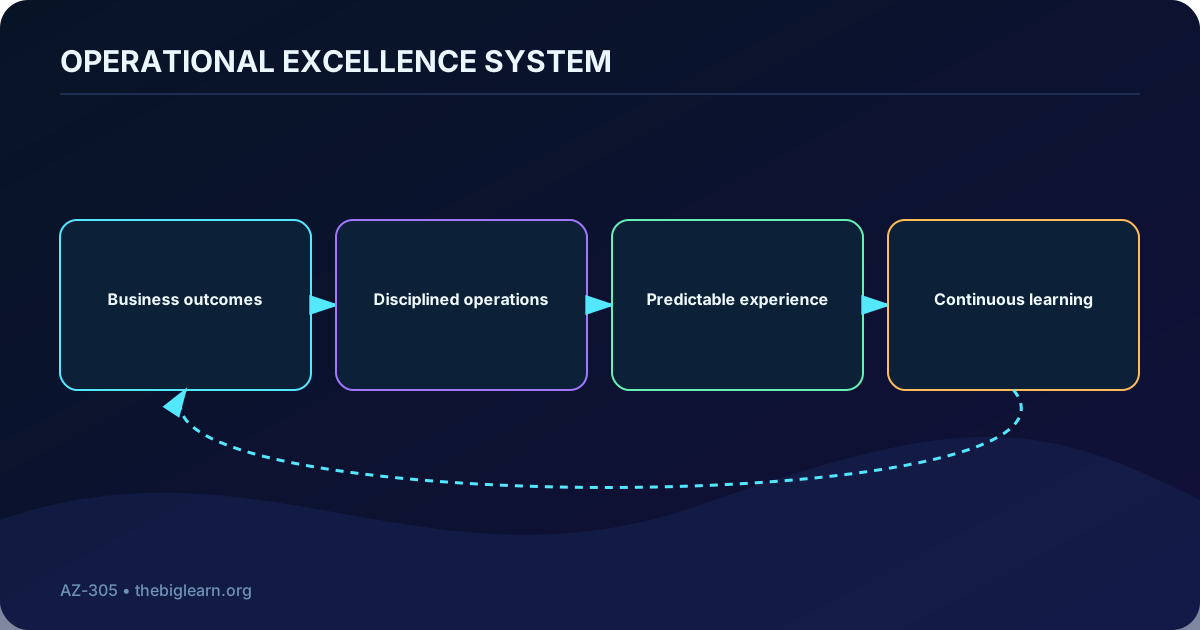
Operational health is visible in three questions: are operations disciplined and repeatable, do customers receive a stable and predictable experience, and does the team learn from evidence? Without clear ownership, teams often rely on labor-intensive fixes that create inconsistent outcomes and defer durable improvement.
Operational Excellence turns change into a controlled, learnable system.
Topic summary
Design the operating model with the workload so changes remain predictable, measurable, and owned.
2. Pursue the right outcomes in the right way
Operational Excellence has a practical ambition: do the right thing, do it the right way, and solve the right problems together. Smooth processes help a workload meet business objectives and internal or external compliance obligations. Weak operational requirements instead surface as failed releases, uneven user experience, avoidable expense, and exhausted teams.
Quick remediation has a place during an incident, but it is not an operating strategy. Assign workload ownership, review recurring friction, prioritize by customer and business impact, and turn lessons into deliberate changes.
Topic summary
Combine clear ownership, repeatable execution, and team learning to protect business and customer outcomes.
3. Use the five named design principles
Operational Excellence principles and their focus.
Principle
Focus
Embrace DevOps culture
Collaboration, shared responsibility, ownership, and continuous learning.
Establish development standards
Right-sized methods, quality gates, early testing, and measurable delivery.
Evolve operations with observability
Telemetry, health models, audience-specific views, and actionable alerts.
Automate for efficiency
Select valuable workflows, design for automation, and engineer automation as a critical dependency.
Adopt safe deployment practices
IaC, consistent pipelines, small changes, progressive exposure, and recovery.
The exported summary says “six key principles,” but the module itself names the five principles above, as does the current Microsoft framework. Treat the statement as a counting inconsistency, not as a missing sixth principle.
Topic summary
Study the five explicitly named principles and understand how culture, standards, observability, automation, and delivery reinforce one another.
4. Embrace DevOps culture in the Contoso HR project
Contoso HR is planning an internal line-of-business application before design or implementation begins. Development, test, and operations must work toward one customer-focused mission instead of guarding separate knowledge, tools, and responsibilities.
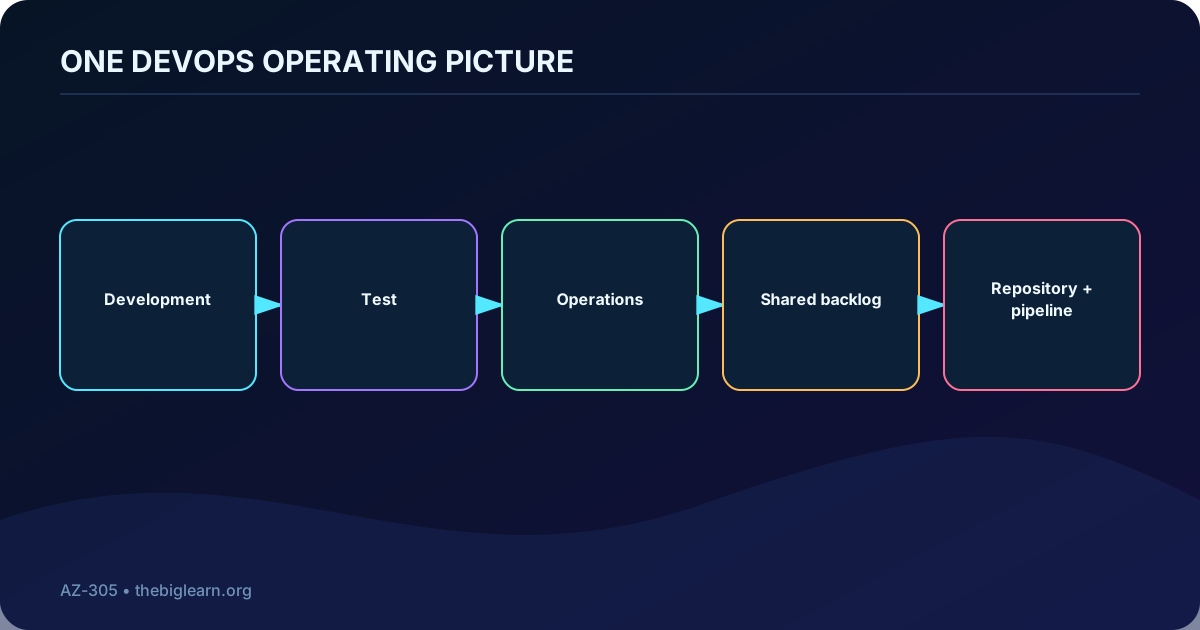
DevOps is a community of practice, not a product. Shared responsibility makes the workload team accountable for performance and reliability wherever the application runs. Development includes operations in feedback loops; operations returns production insight and resources that improve delivery.
Topic summary
Build DevOps around a common mission, shared ownership, transparent communication, and responsibility for the whole lifecycle.
5. Collaborate through common systems and escalation paths
The three technical teams previously mixed Slack, Microsoft Teams, , Excel, and separate repositories. Fragmentation obscured environment status, work, documents, and incident procedures. Technical leads and sponsors therefore standardize on for backlog, source repository, and deployment pipeline, and Microsoft Teams for communication.
A shared backlog aligns feature work and defect repair, while a common knowledge location makes escalation paths easy to find. The knowledge-check benefit is coordination: common tools keep development and operations informed and reduce communication failures; they do not eliminate monitoring, automation, or security controls.
Common systems provide one operational picture without erasing specialized roles.
Topic summary
Standardize collaboration and work tracking so every team sees priorities, environment state, and escalation guidance.
6. Create continuous learning without blame
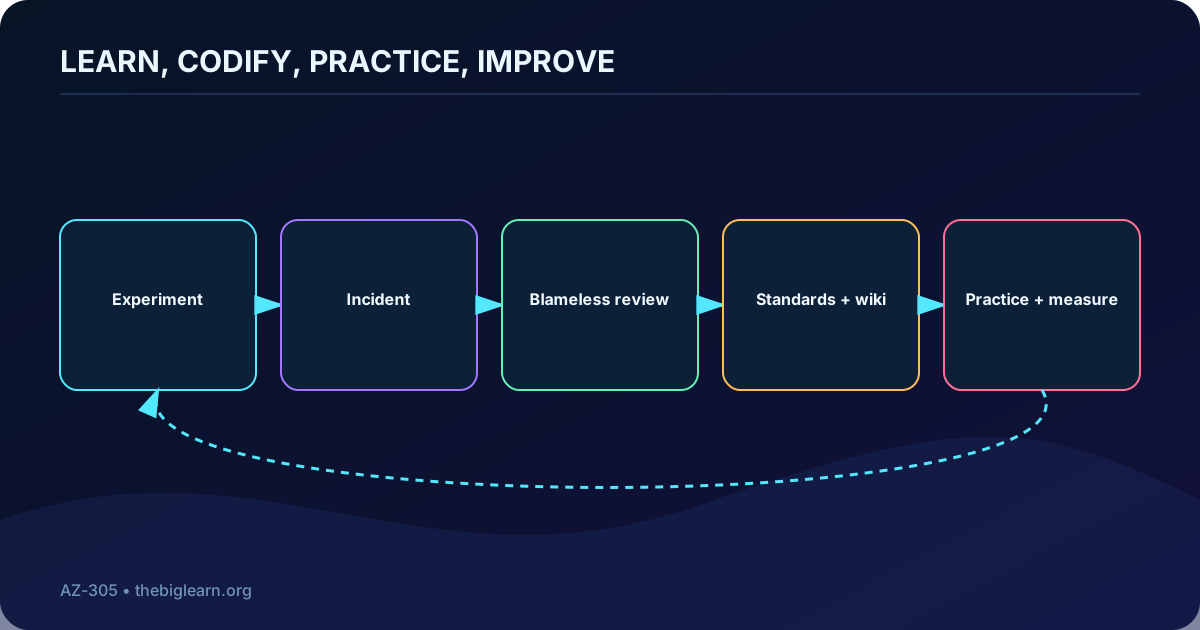
Keep design specifications, operating procedures, incident plans, and retrospective outcomes in an accessible wiki. After incidents and development cycles, run blameless reviews that examine system conditions and process choices rather than searching for an individual to punish.
Use inexpensive experiments, proofs of concept, and A/B tests to validate ideas. Contoso tests user-experience proposals with real feedback, documents the result, improves onboarding for new staff, and celebrates progress during retrospectives. In the knowledge check, blameless incident review is the practice that builds learning and experimentation.
Topic summary
Turn incidents, experiments, and completed work into shared knowledge and concrete improvements.
7. Codify development and operational procedures
Standards should cover routine work, exceptional processes, emergency and recovery drills, tool choices, monitoring, training, stakeholder communication, and customer disclosures. Record why decisions were made and validate the standards on a regular cadence.
Contoso agrees on formatting, naming, error handling, version control, and security conventions, then enforces them through reviews and tools. Operations expands its day-to-day and troubleshooting documentation in the team wiki. quality metrics help leadership see whether standardization improves productivity. The scenario did suffer from inconsistent tools and methods, so the related true-or-false answer is true.
Procedures become scalable when the team documents, practices, measures, and revises them.
Topic summary
Document and rehearse normal and emergency work, then use evidence to keep standards relevant.
8. Establish development standards for Contoso Ticketing
A growing SaaS startup uses to deliver customer-specific onboarding and integrations, but lacks a formal development method. More projects and staff have produced unclear communication, weak meetings, irregular cycles, late onboarding, and pressure from leadership.
Right-sized standards should accelerate the path from code to test rather than add ceremony for its own sake. They align the team and stakeholders on roles, expectations, completion criteria, quality, and the technical work that matters.
Topic summary
Choose enough structure to improve flow, quality, and alignment without burdening a small team.
9. Adopt an industry method and a shared backlog
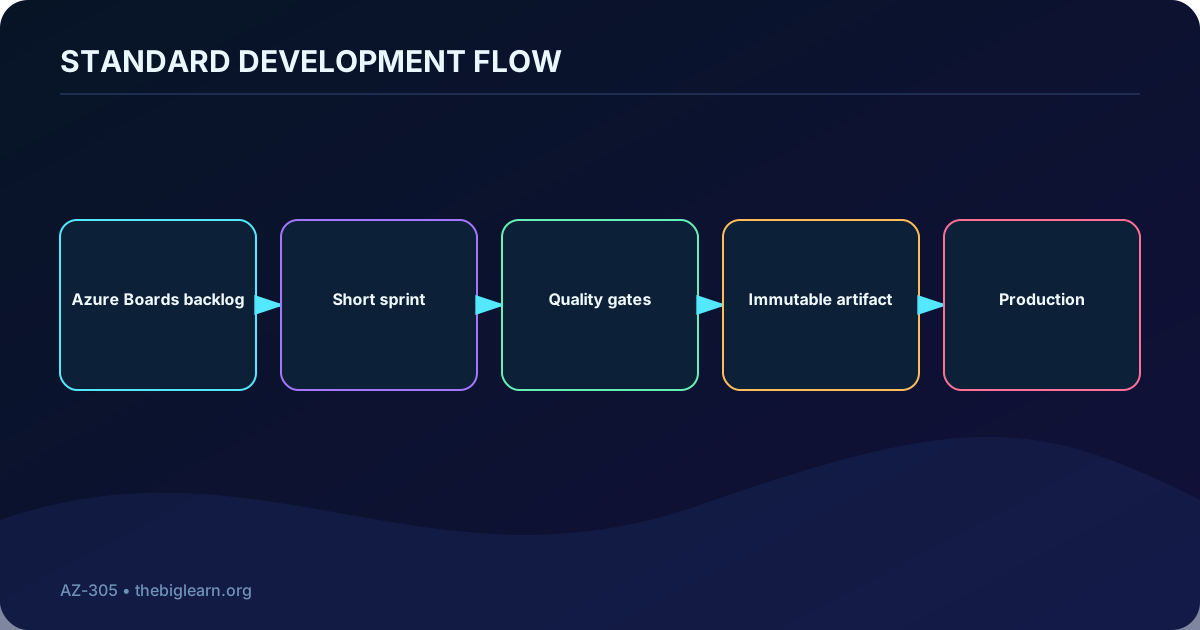
Contoso adopts Scrum, with defined roles, events, artifacts, rules, frequent check-ins, short sprints, and a single backlog. maintains that backlog, making priorities and risk visible and enabling more consistent delivery.
A known method establishes cadence and responsibilities, while milestone reviews catch problems before they grow. For the exam-style question, —not Excel, , or —is the listed industry tool for backlog management.
A shared method connects planning to controlled delivery.
Topic summary
Use a suitable industry method, one prioritized backlog, short feedback cycles, and explicit roles.
10. Shift testing left and preserve artifact integrity
Start quality assurance early and include functionality, performance, security, usability, infrastructure, configuration, and data tasks in each feature plan. Automate routine checks where practical and treat an artifact as immutable while it advances through environments and quality gates.
Contoso records test cases, data, and results in and places checks in pipelines before promotion. This reduces environment differences, failed deployments, production bugs, rework, and customer frustration. The correct improvement strategy is testing early and often, not postponing all QA until the end.
Topic summary
Test functional and nonfunctional behavior early, promote the same artifact, and automate gates that build confidence.
11. Measure development efficiency and outcomes
Measure whether process changes work. Track trends in defects, failed updates, deployment lead time, feedback-loop duration, predictability, and customer outcomes. Contoso uses reports for velocity, cumulative flow, bug creation and resolution, and code-to-production duration against targets.
dashboards and can extend reporting. The knowledge-check answer is that Contoso used reporting to compare improvements over time; isolated timings, surveys, or customer ratings alone would not provide the same delivery-system view.
Topic summary
Use delivery and quality trends to allocate effort and prove which development changes improve flow.
12. Evolve Contoso Real Estate operations with observability
The internal relocation application places its microservices on ; data and supporting functions use ,,, and . Operational observability must support proactive maintenance, quality, security, capacity planning, and product decisions—not merely collect data.
Health modeling combines signals into an understandable condition for the workload and helps teams intervene before degradation becomes a customer incident. Efficient monitoring shifts time from reactive firefighting toward experience improvement.
Topic summary
Design observability to explain workload health and guide action across technical and business concerns.
13. Correlate telemetry across every solution tier
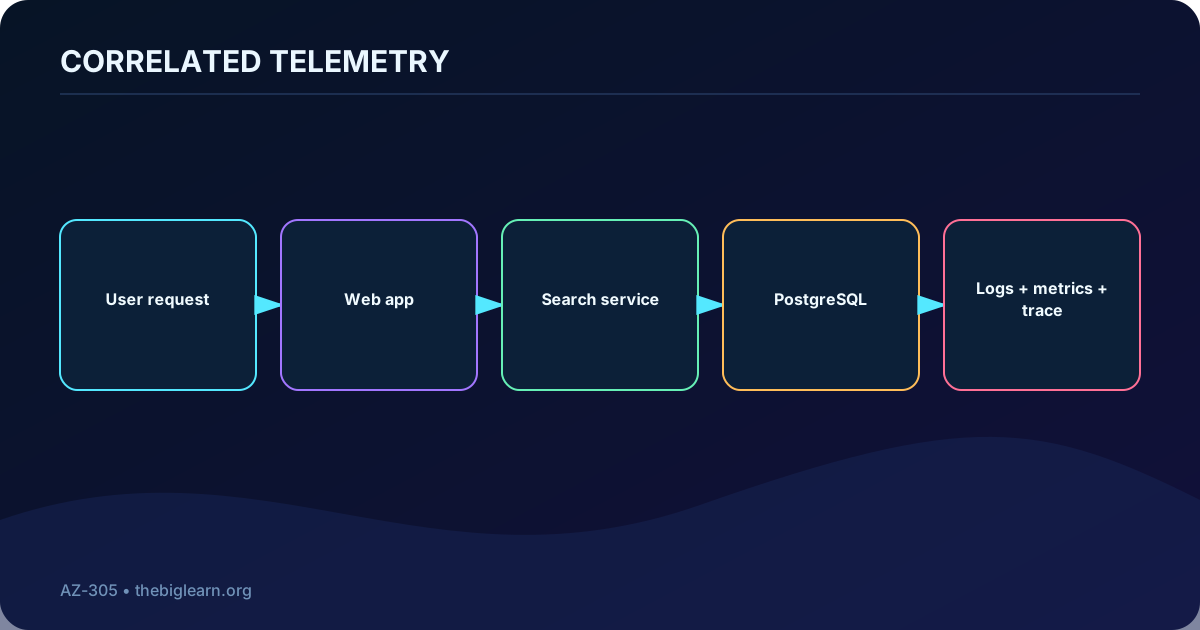
Intermittent blank search pages correspond to database connection timeouts, but isolated microservice logs cannot prove causation. The team expands application and service instrumentation with time, search context, client and identity correlation, while handling privacy and access appropriately.
Correlated evidence reveals that unhandled query timeouts introduced by the latest update cause the user-facing failure. The team then designs end-to-end distributed tracing with OpenTelemetry. In the knowledge check, deeper application monitoring identifies the root cause.
Correlation turns separate signals into an incident narrative.
Topic summary
Instrument key journeys consistently and correlate context across tiers so symptoms can be tied to causes.
14. Build dashboards for specific audiences
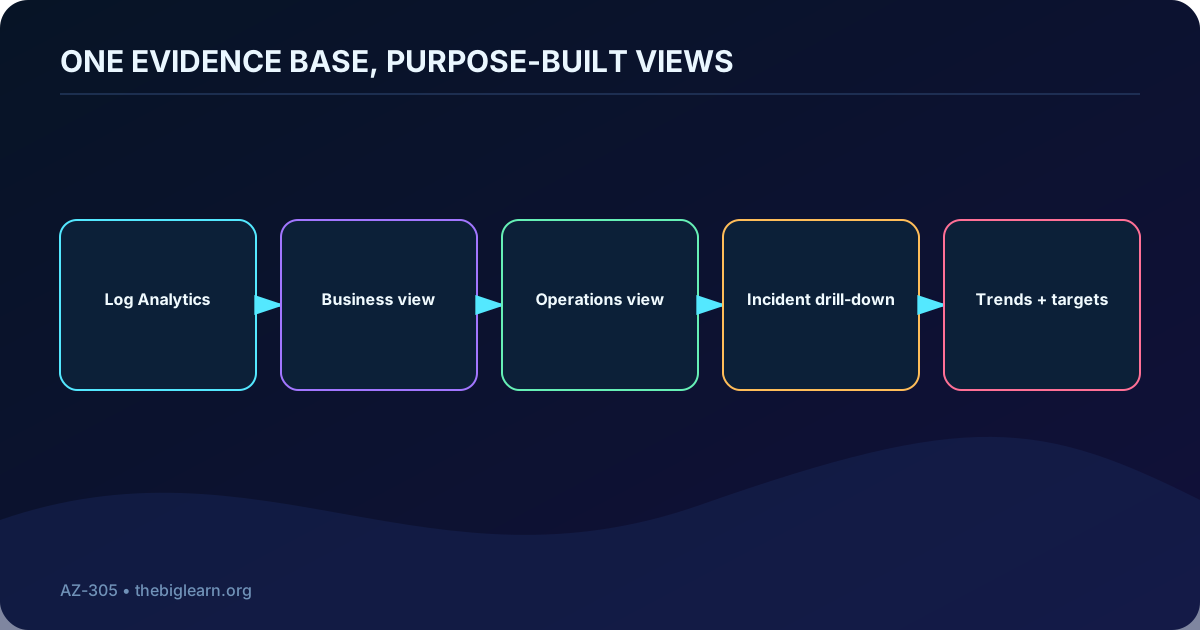
A shared Log Analytics workspace centralizes data but does not automatically make it usable. Create situational views for stakeholders that emphasize solution health, users, searches, reservations, business targets, and trends. Give operators detailed dashboards and workbooks with drill-down for troubleshooting, incident response, and daily monitoring.
Refresh views frequently and retain enough detail for their purpose. The correct knowledge-check choice is a dashboard tailored to each team that needs workload data—not one universal dashboard or a custom dashboard for every individual.
One evidence base can support several purpose-built views.
Topic summary
Tailor visualizations to decisions and audiences while preserving a common, governed telemetry foundation.
15. Make alerts actionable and proactive
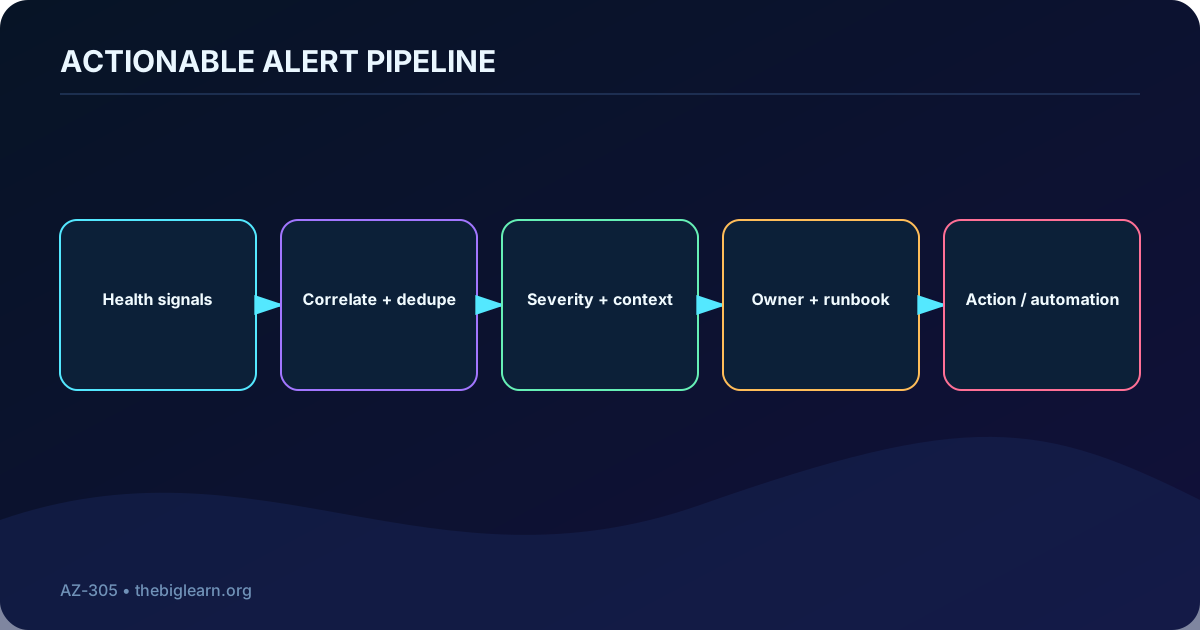
Alert fatigue appears when notifications are redundant, unclear, low priority, or sent to the wrong people. Retain signals that require action, attach severity and useful context, combine related evidence, align thresholds with business goals, and route each alert to an accountable responder.
Contoso removes noisy alerts and adds early notification for a sustained database slowdown so administrators can intervene before an outage. It then considers automated responses for common conditions. Alerts should not be mostly informational, so the knowledge-check statement is false.
A useful alert starts a response instead of creating another investigation queue.
Topic summary
Notify only when action is expected, include context and severity, and detect degradation before complete failure.
16. Automate deliberately at Contoso University
The online-learning application uses Azure ,,,, and . Frequent manual work consumes time, introduces variation, and grows risk as the service expands. should remove repetitive effort while preserving judgment for complex decisions.
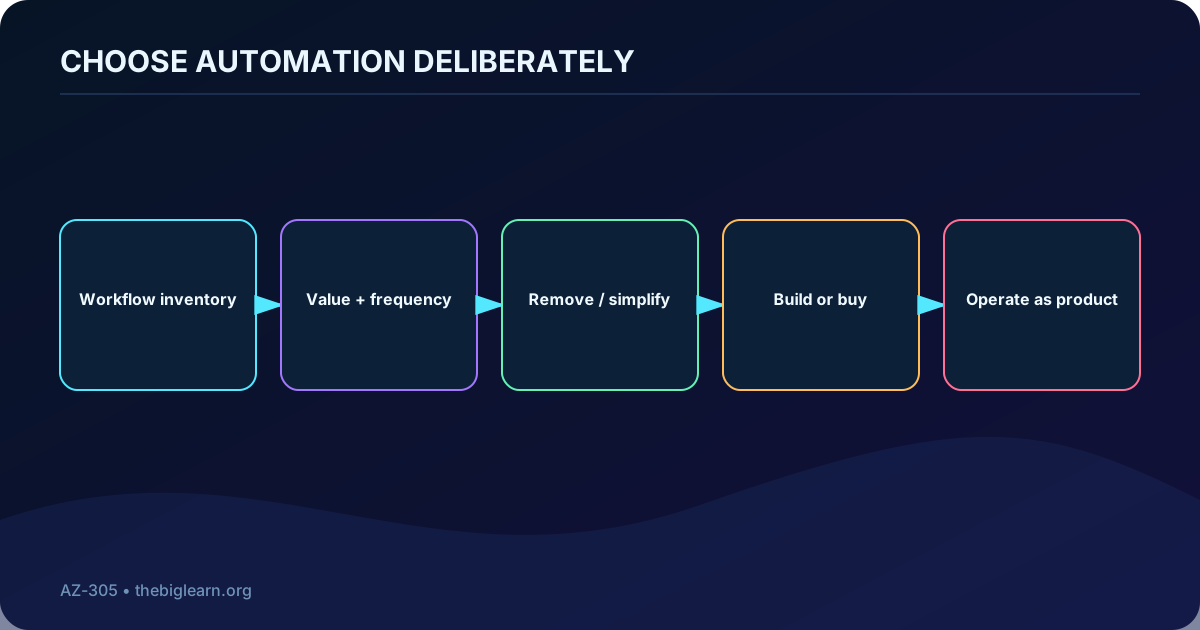
saves time, effort, and cost and can improve accuracy and reliability. It is not automatically valuable: first simplify or remove an unnecessary workflow, then automate what remains.
Topic summary
Use automation to eliminate repeatable toil and errors, not to preserve wasteful processes.
17. Rank workflows by value before automating
Inventory workflows and evaluate complexity, effort, frequency, accuracy, timeliness, expected lifespan, risk, and payoff. Compare buying a tool with building and maintaining a custom solution. Documentation can help implementation, but it is not one of the source scenario’s ranking factors; that is the answer to its knowledge question.
Contoso prioritizes account provisioning, password reset, and deprovisioning because they are common and rules-based. The recovered capacity lets the team resume higher-value improvements.
begins with selection and simplification.
Topic summary
Automate high-payoff, durable, rules-based work after removing unnecessary steps and comparing build with buy.
18. Design components so automation can operate them
readiness is an architectural property. A dynamic interface with unstable fields is difficult to test. Contoso gives controls unique identifiers, uses semantic HTML and labels, supports keyboard navigation, and creates accessible components that test tools can address reliably.
Automated UI cases join the daily suite so every build receives feedback. The scenario succeeds by modifying UI components to support automation, not by abandoning automated testing or merely rewriting fragile tests.
Topic summary
Expose stable interfaces and accessible semantics so automation is dependable rather than brittle.
19. Engineer automation as a production dependency
must scale with the workload and meet the same reliability, security, performance, cost, and operational standards. Undocumented scripts, weak error handling, scattered ownership, and hidden credentials convert automation into technical debt and a failure path.
Contoso replaces a slow database-loading script used for performance tests. The new implementation anonymizes and masks copied production data, handles errors, maintains consistent performance as data grows, and follows normal engineering practices. The correct knowledge answer is that automation must satisfy all Well-Architected pillar areas.
Topic summary
Treat automation as critical code: secure, observable, tested, documented, scalable, and maintained with the workload.
20. Adopt safe deployment practices for Contoso Air
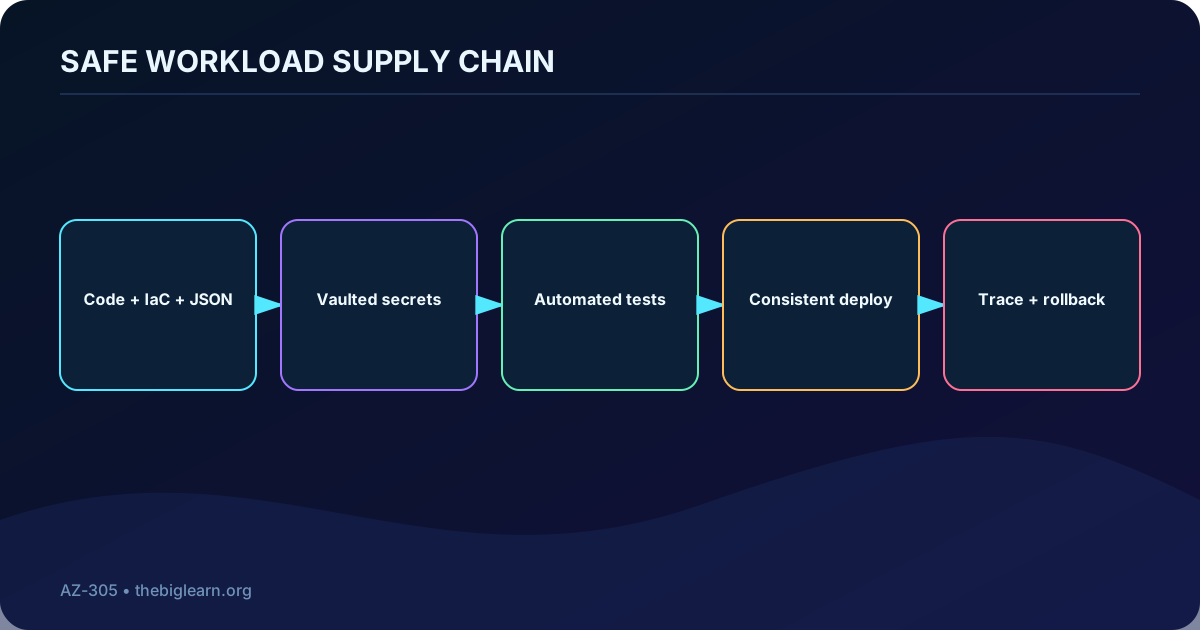
The flight-booking application runs on Azure ,,,, and . An automated, modular supply chain should deploy code, configuration, infrastructure, and artifacts consistently across every environment.
Testing, monitoring, versioning, traceability, and compensating actions reduce the impact of unexpected conditions. Safe delivery is designed before production rather than improvised after a failed release.
Topic summary
Build one repeatable supply chain with guardrails and recovery for every kind of change.
21. Deploy infrastructure and configuration through code
Use declarative infrastructure as code (IaC) for the repeatable, production-ready state. Prefer modular layers aligned to lifecycle needs without unnecessary abstraction. Standard tool choices reduce variance, expose configuration drift, simplify maintenance, and let infrastructure artifacts participate in review, testing, and version history.
Contoso moves environment configuration into separate JSON files under source control, keeps secrets in a vault per environment, logs deployment changes for audit and troubleshooting, validates configuration through pipeline tests, and plans automated rollback. The underlying principle in the knowledge check is that all deployments should run through pipelines—not only production or nonproduction.
The supply chain makes desired state repeatable and every execution traceable.
Topic summary
Version declarative infrastructure and configuration, protect secrets, test changes, and automate recovery.
22. Release small updates on a regular cadence
Large quarterly releases combine too many variables, expand the blast radius, make validation difficult, and turn rollback into a stressful event. Small, closely related changes are easier to understand, test, observe, repair, or reverse.
Contoso replaces major releases every three or four months with frequent, thoroughly tested updates through lower environments. Quality, team confidence, morale, and feature lead time improve. The recommended exam choice is small, frequent deployment.
Topic summary
Reduce batch size so each release is easier to validate, diagnose, and recover.
23. Use progressive exposure and compatibility checks
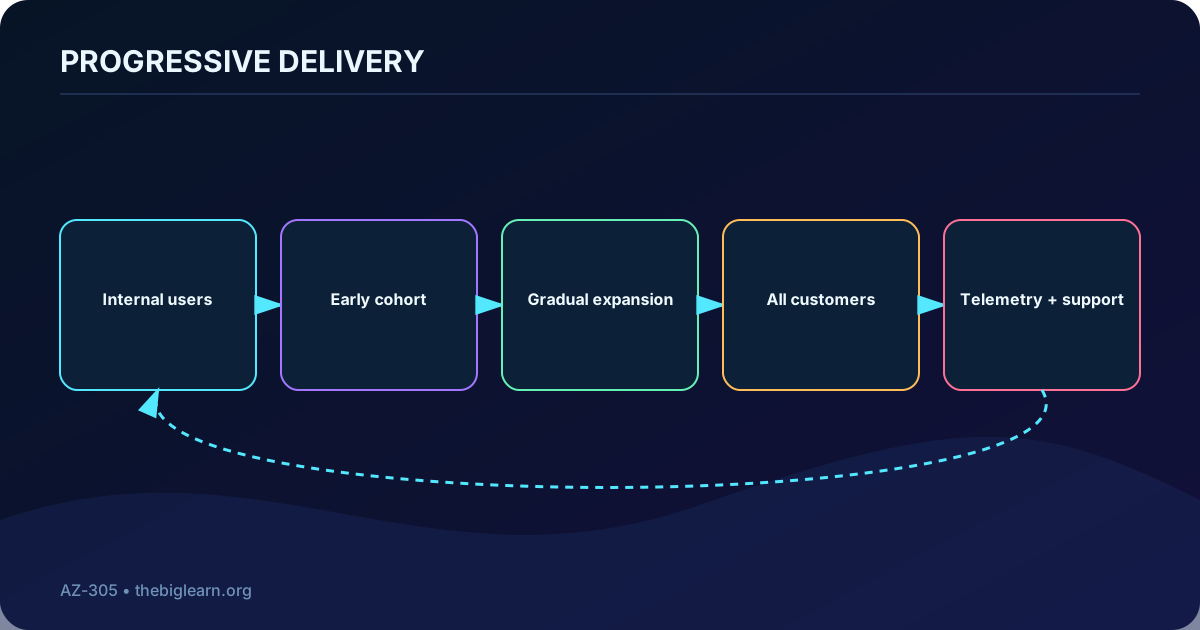
Begin with a small set of instances or users, observe technical and support signals, and expand only when evidence is acceptable. Verify backward and forward compatibility so mixed versions can coexist safely during rollout.
Contoso uses feature flags to select an early audience, expands access in stages, and feeds support cases into product decisions and FAQs. This is the source scenario’s progressive-exposure answer. Blue-green or canary deployment can also control infrastructure exposure, but the fictional case specifically uses feature flags.
Exposure grows only as confidence grows.
Topic summary
Limit early blast radius, observe real behavior, preserve compatibility, and keep a fast disable or rollback path.
24. Balance Operational Excellence tradeoffs
Standards, telemetry, test environments, automation, feature stores, and parallel deployment capacity add cost and complexity. Observability data and automation identities also expand the security surface. Too much process can slow delivery; too little creates variation and fragile heroics.
Right-size controls by workload risk and maturity. Reuse approved templates, share specialist capabilities, govern sensitive telemetry, keep foundational deployment layers stable, and measure whether each practice improves customer outcomes and delivery performance.
Topic summary
Invest in operational controls in proportion to risk, then verify that they reduce failure and recovery cost.
25. Review the complete operating loop
Culture: common purpose, shared responsibility, common tools, blameless learning, and explicit procedures.
Development: an appropriate method, shared backlog, early comprehensive testing, immutable artifacts, and delivery metrics.
Observability: health modeling, correlated telemetry, audience-specific dashboards, and actionable proactive alerts.
: workflow selection, automation-ready interfaces, and production-grade engineering.
Delivery: declarative IaC, one pipeline method, small updates, progressive exposure, compatibility, and recovery.
Together these practices help the team do the right work, execute it correctly, and solve the right problems collectively. Smooth, repeatable operations keep workloads predictable during change while supporting policy and regulatory obligations.