Suggested study time: 55 minutes • Beginner level • Aligned with the Azure architecture and services domain of AZ-900
By João Ricardo Dutra••Complete original content
1. Azure compute services and chapter objectives
Azure compute spans infrastructure that behaves like a server, managed container platforms, event-driven code, web hosting, and services for intelligent or connected solutions. The right choice depends on how much operating-system control, portability, automatic scaling, and platform management a workload needs.
Learning objectives
Compare , containers, , and as compute and hosting choices.
Describe ,, availability sets, and the resources required by a virtual machine.
Explain and the principal Azure container services.
Recognize Azure AI services, ,, and and edge services.
Choose an application-hosting option from , containers, and .
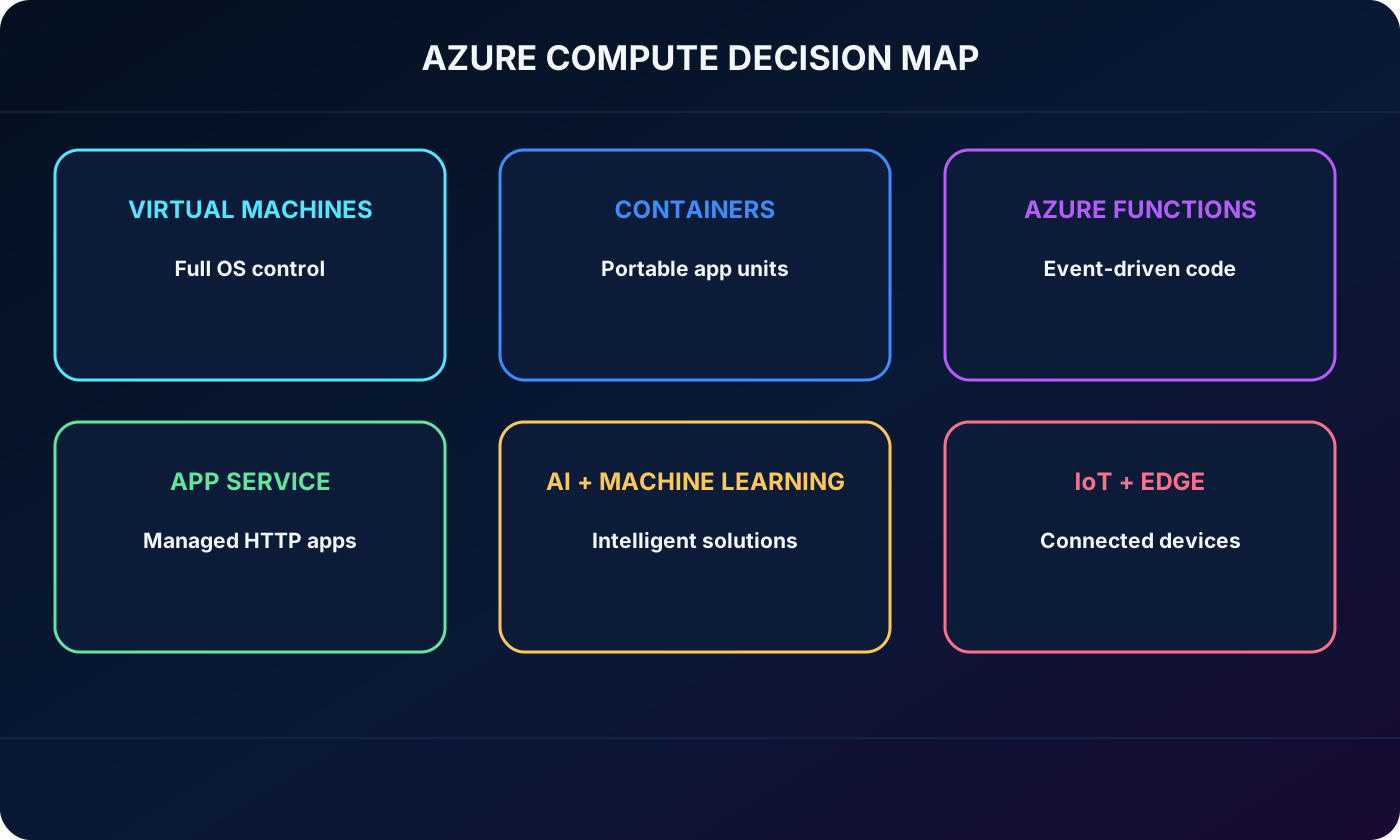
Azure compute spectrum from virtual machines to containers, functions, application hosting, AI, machine learning, and IoT.
2. A decision map for Azure compute
provide the greatest control and the greatest operating responsibility. Containers package an application and its dependencies without a separate guest operating system for every instance. runs code in response to events. hosts HTTP applications and related workloads while Azure manages the platform.
How the principal choices differ.
Choice
Best fit
Customer focus
Custom operating systems, legacy software, or specialized server configuration
OS, patches, runtime, application, and data
Containers
Portable, isolated application units and microservices
Container image and application; platform responsibility depends on the service
Short, event-driven work with variable demand
Function code, triggers, bindings, and data
Web apps, REST APIs, mobile backends, and background jobs
Application code and configuration
3. Azure and their use cases
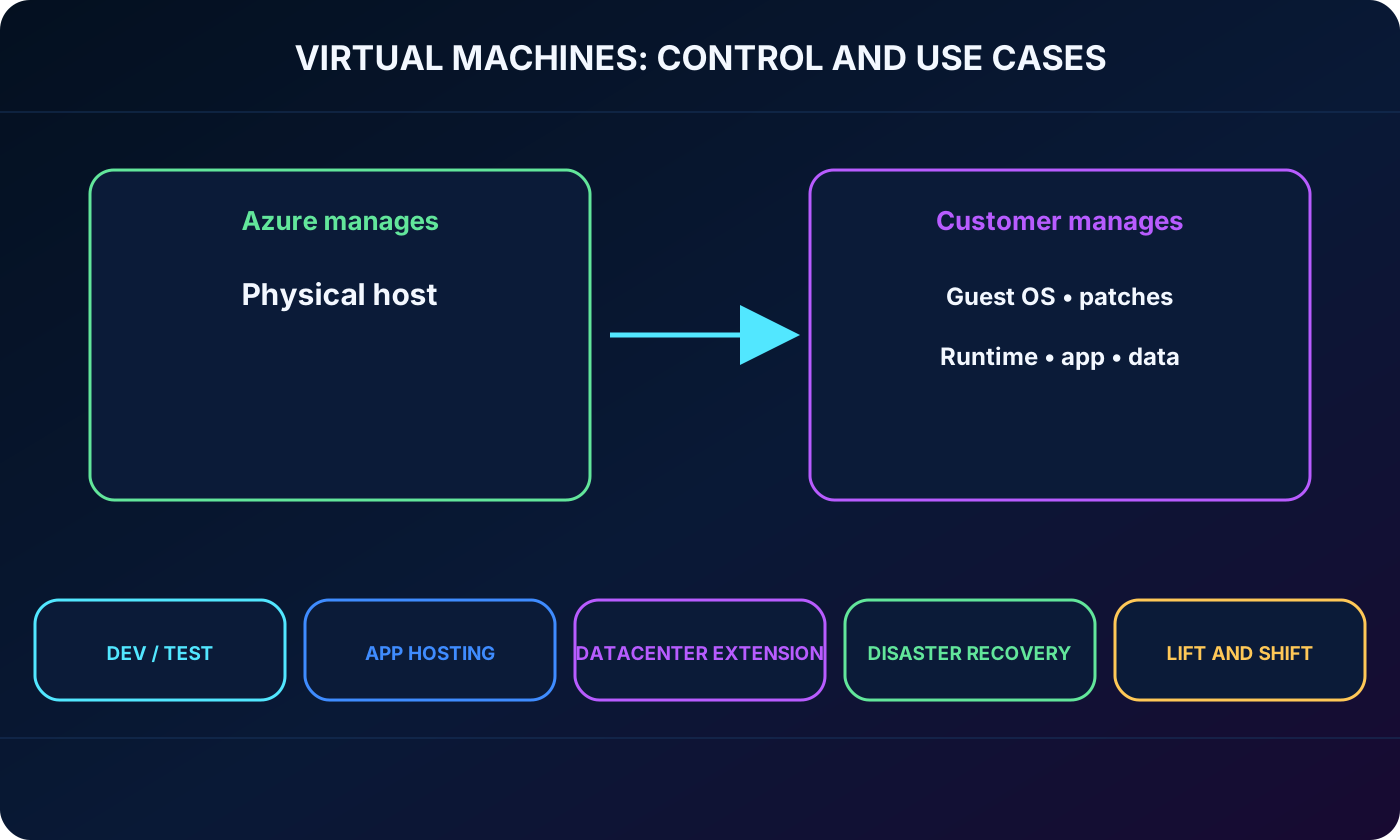
Azure are virtualized servers delivered as infrastructure as a service. Azure operates the physical host, while the customer chooses and administers the guest operating system, installed software, security configuration, patches, and application. A prebuilt image can provision a known operating system and toolset quickly.
Development and test: create a required OS and application combination quickly, then remove it when the work ends.
Cloud application hosting: add or remove server capacity as demand changes.
Datacenter extension: connect cloud virtual machines to an existing network.
Disaster recovery: keep or create failover capacity away from the primary environment.
Lift and shift: move a server workload with limited redesign when its current architecture must be preserved.
Azure Virtual Machine responsibility stack and five common use cases.
4. Resources and sizing for a virtual machine
A usable virtual machine is more than a compute instance. Its design includes a size, one or more disks, and networking. The size establishes virtual CPU and memory. Disks provide operating-system and data storage, with HDD or SSD options. Networking places the machine in a and can add a public IP address and permitted ports when internet access is required.
Selection also considers disk capacity, IOPS and throughput, network throughput, support for Premium SSD, and the hardware generation. More virtual CPUs help concurrent or CPU-bound work; more RAM keeps larger working sets in memory. Start with the workload behavior, measure it, then resize or scale rather than selecting by name alone.
5. VM size families and the D2sv5 naming example
Common Azure Virtual Machine size families.
Family
Optimization
Typical workload
B
Burstable and cost efficient
Development, test, and workloads with occasional CPU peaks
D
General purpose
Web servers and small or medium application servers
E
Memory optimized
In-memory databases and analytics
F
Compute optimized
CPU-intensive application tiers
M
Very large memory
Large enterprise databases
L
optimized
High-throughput storage and data processing
N
GPU enabled
AI training, inference, visualization, and graphics
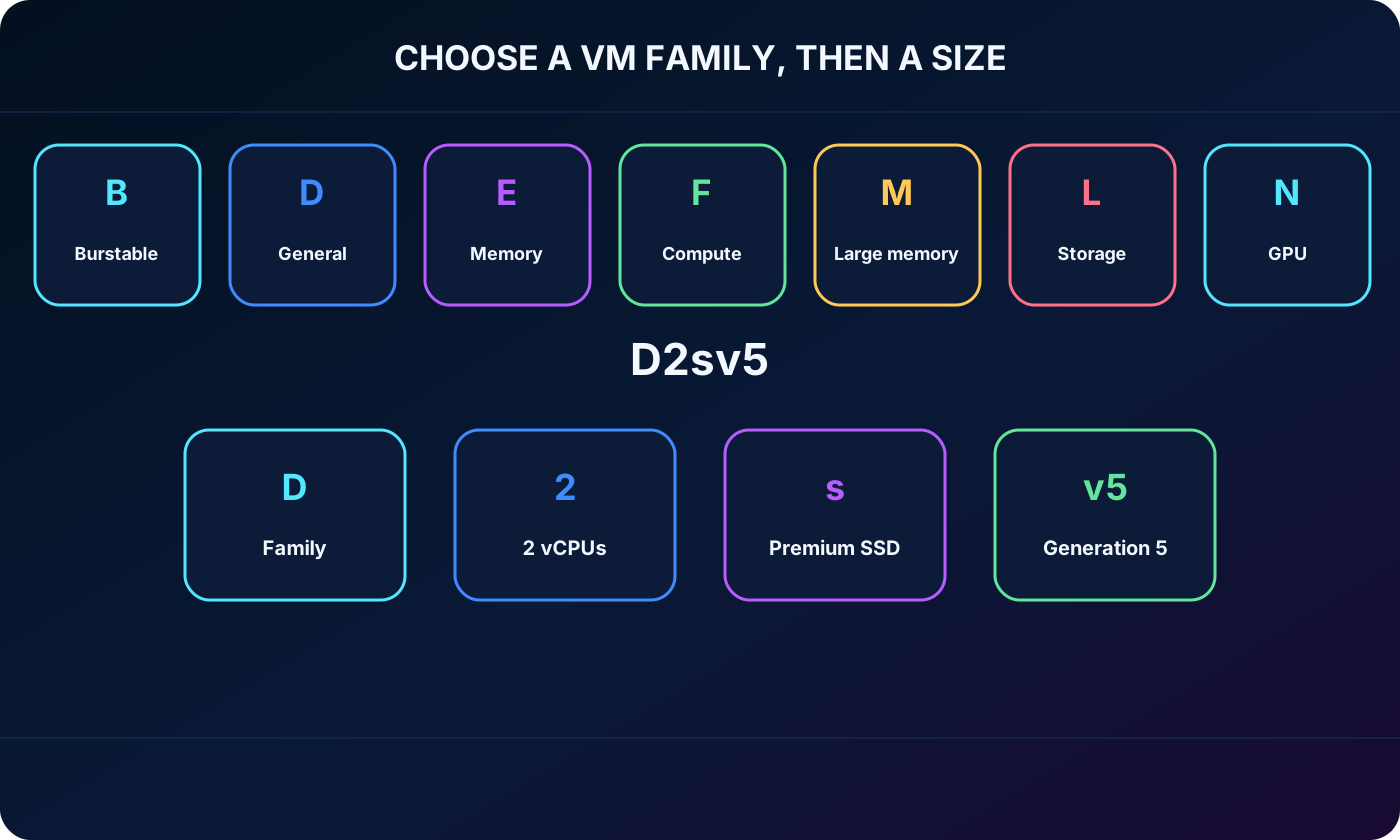
In the illustrative size name D2sv5, D identifies the general-purpose family, 2 indicates two virtual CPUs, s indicates Premium SSD support, and v5 identifies the hardware generation. Select a family for the workload profile and then choose the capacity and scaling model.
VM families and the meaning of the Azure size name D2sv5.
6.
create and manage a group of similarly configured, load-balanced virtual machines. A central model keeps instances consistent, and scaling rules can add or remove capacity from demand metrics or schedules. Integration with load balancing distributes incoming work across the group.
A single virtual machine can be appropriate for development or a low-impact task. A scale set is a better fit when an application tier must increase capacity, recover instances, and avoid manual configuration of every server.
7. Availability sets, update domains, and fault domains
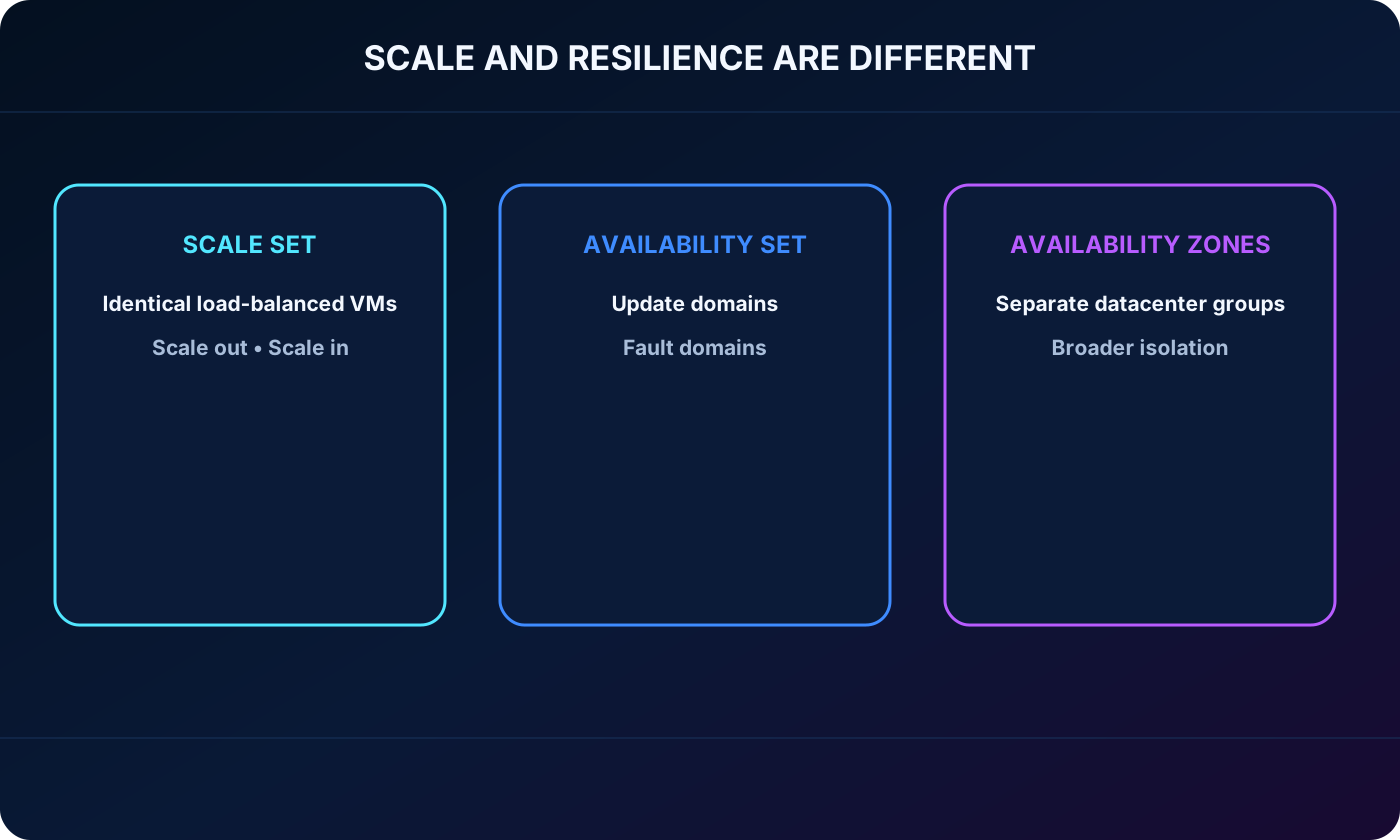
An availability set improves the resilience of multiple virtual machines within one Azure region. Update domains group machines that may restart together during planned platform maintenance. Fault domains separate machines across hardware groups that do not share the same power and network failure point.
This mechanism provides VM-level redundancy but is narrower than Availability Zones, which use physically separate datacenter groups. Where zone support and workload requirements allow it, zones usually provide broader isolation. The availability set itself has no separate charge, but every virtual machine and its dependent resources are billed.
Scale sets increase capacity while update domains, fault domains, and Availability Zones address different failures.
8.
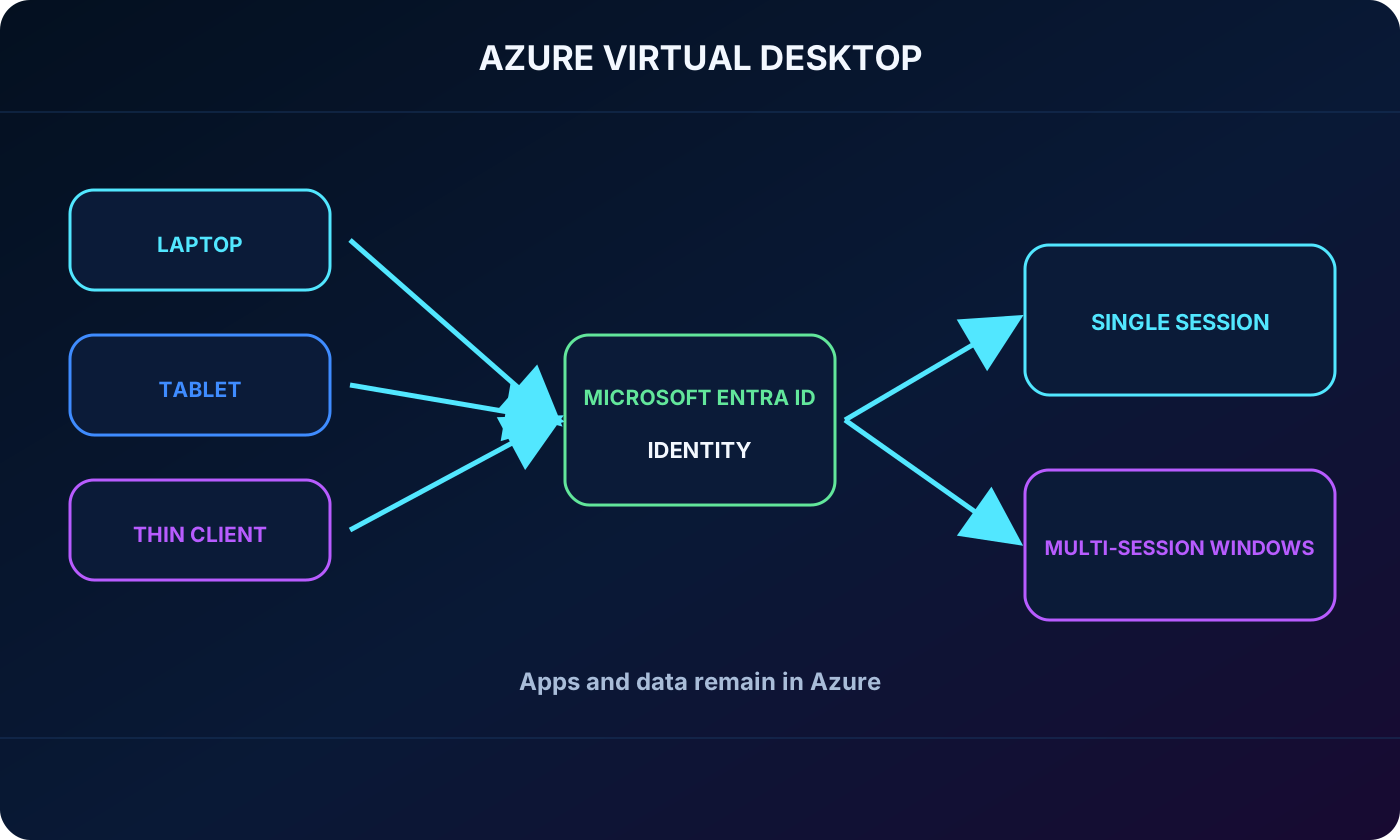
is a managed desktop and application virtualization service. Users securely reach Windows desktops and applications from different devices and locations, while applications and data remain in Azure sessions instead of being stored primarily on each endpoint.
It suits distributed staff, contractors, hybrid workers, and support teams that need a standardized environment with centrally managed tools, policies, and security. supports identity and access. Administrators can choose single-session desktops for dedicated use or multi-session Windows to share host capacity among users.
Centralized access using and single-session or multi-session hosts.
9. Containers compared with virtual machines
Each virtual machine normally carries a complete guest operating system. Containers instead isolate applications while sharing the host operating-system kernel. This makes them smaller and faster to create, stop, replace, and scale. Azure supports Docker container images.
Containers are useful for dynamic demand and recovery because an instance can be recreated quickly after a crash or host interruption. The reduced footprint does not remove architecture decisions: teams still choose how images are built, stored, networked, scaled, observed, and orchestrated.
10. Azure container services
Three Azure choices for running containers.
Service
Management model
Distinctive capability
PaaS and minimal setup
Run a container directly without provisioning virtual machines or an orchestrator
Managed application platform
Built-in scaling and load balancing with little container-platform administration
Managed Kubernetes orchestration
Coordinate the lifecycle, placement, scaling, and operation of a container fleet
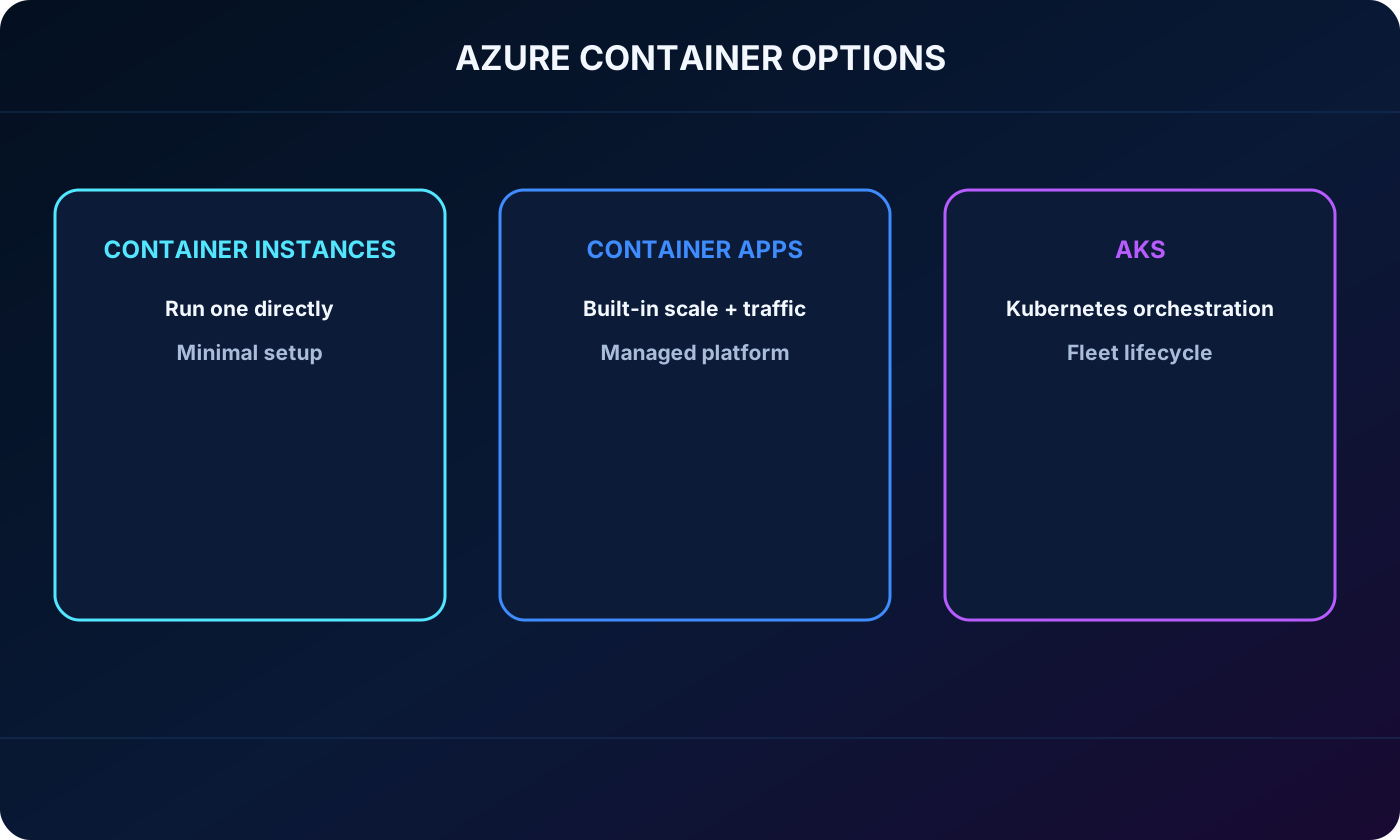
is the quickest route for a simple isolated container. adds application-oriented scaling and traffic features. is appropriate when a solution needs Kubernetes control and orchestration across many services.
Comparison of ,, and Azure Kubernetes Service.
11. Containers and microservices
A microservices design divides a solution into small components that can be developed, deployed, maintained, and scaled independently. A web solution might place its front end, back end, and storage-facing service in separate containers. If only the back end reaches capacity, that component can scale without multiplying the others.
Independence also limits the scope of change: a team can update the front end or replace a storage implementation without rebuilding every component, provided the contracts between services remain compatible.
12. and event-driven serverless compute
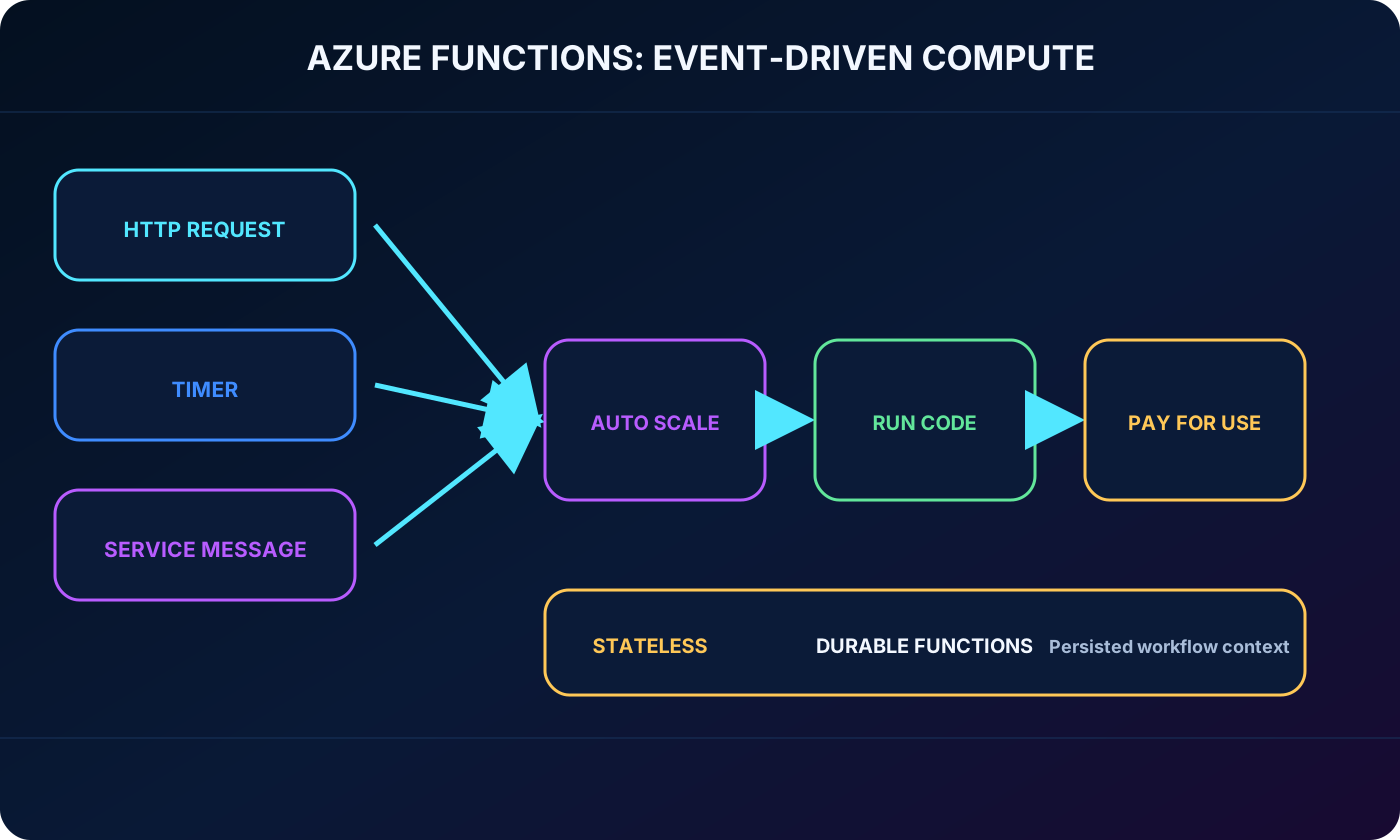
executes code when a trigger occurs, such as an HTTP request, a timer, or a message from another Azure service. In a serverless plan there is no virtual machine or container for the customer to keep running. Capacity is allocated for events, scales with demand, and the consumption model charges for the compute time used.
Functions are well suited to brief work—often seconds or less—when developers should focus on code and integration rather than infrastructure. A REST endpoint, scheduled cleanup, queue processor, or reaction to a service event are common patterns.
triggers, automatic scaling, execution, and consumption-based billing.
13. Stateless, Durable Functions, and deployment flexibility
A function is stateless by default: each event should be handled as though the runtime could start fresh. Durable Functions adds orchestration and passes persisted context so a workflow can remember earlier activity and coordinate multiple steps.
is both a central serverless option and a flexible compute platform. If requirements change, a project can use hosting that is not purely serverless, run with virtual-network connectivity, use controlled scaling, or isolate the function environment more fully.
14. Azure AI services and
Azure AI services expose prebuilt capabilities for language, speech, vision, and document processing through APIs. They let a solution add intelligence without first creating and training a model from the ground up. provides generative-AI capabilities for experiences such as conversation and content generation with Azure security and governance controls.
Use prebuilt services when an available capability meets the requirement and speed of integration matters. The application still owns its prompts, data flow, authorization, evaluation, responsible-use controls, and the way AI output affects users or business processes.
15. Agentic AI as an application pattern
An agentic application combines a model with instructions, context, tools, and application logic to pursue a multistep goal. It may use Azure AI services or , call tools, inspect results, and decide the next action within designed guardrails.
Agentic AI is an application pattern, not another Azure compute category. The underlying code still needs a hosting option, identity, networking, data protection, monitoring, and controls for which actions the agent may perform.
16.
supports the development, training, experimentation, deployment, and lifecycle management of custom machine-learning models. Choose it when the organization needs to work with its own data and modeling process rather than only calling a prebuilt AI API.
The exam-level distinction is straightforward: Azure AI services provide ready-made AI capabilities; is a platform for building and managing custom models.
17. ,, and
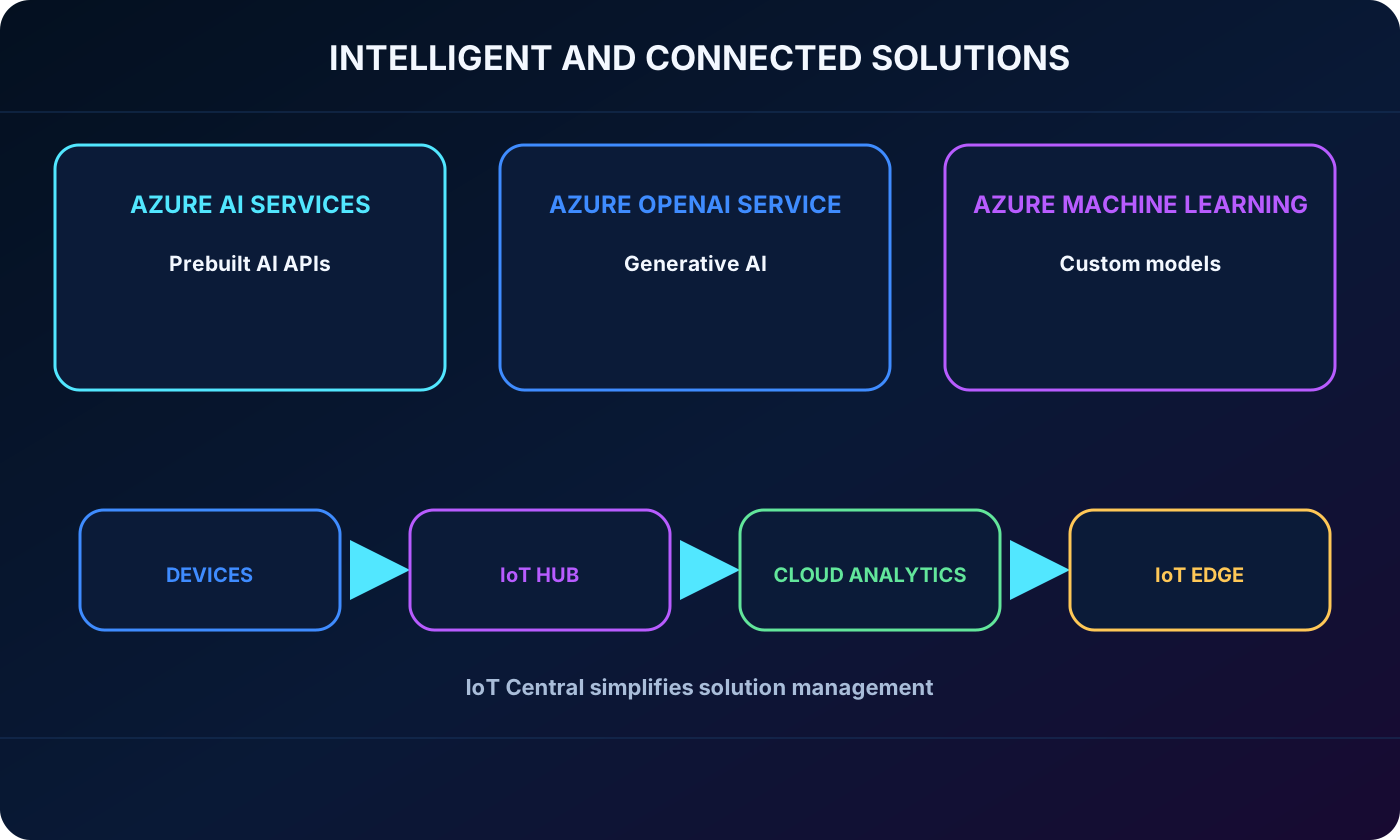
services connect, monitor, and manage devices. provides secure, bidirectional communication between devices and the cloud. is a simplified SaaS platform for building and operating IoT solutions. extends cloud capabilities to equipment near the data source so workloads can act locally.
A typical flow sends device telemetry through for cloud analytics. Insights or model updates can return to an runtime that applies them near the devices, while can simplify solution management. Select IoT when the central requirement is connected devices and telemetry; select AI or machine learning according to whether intelligence is prebuilt or custom.
Decision flow across Azure AI services, ,,,, and .
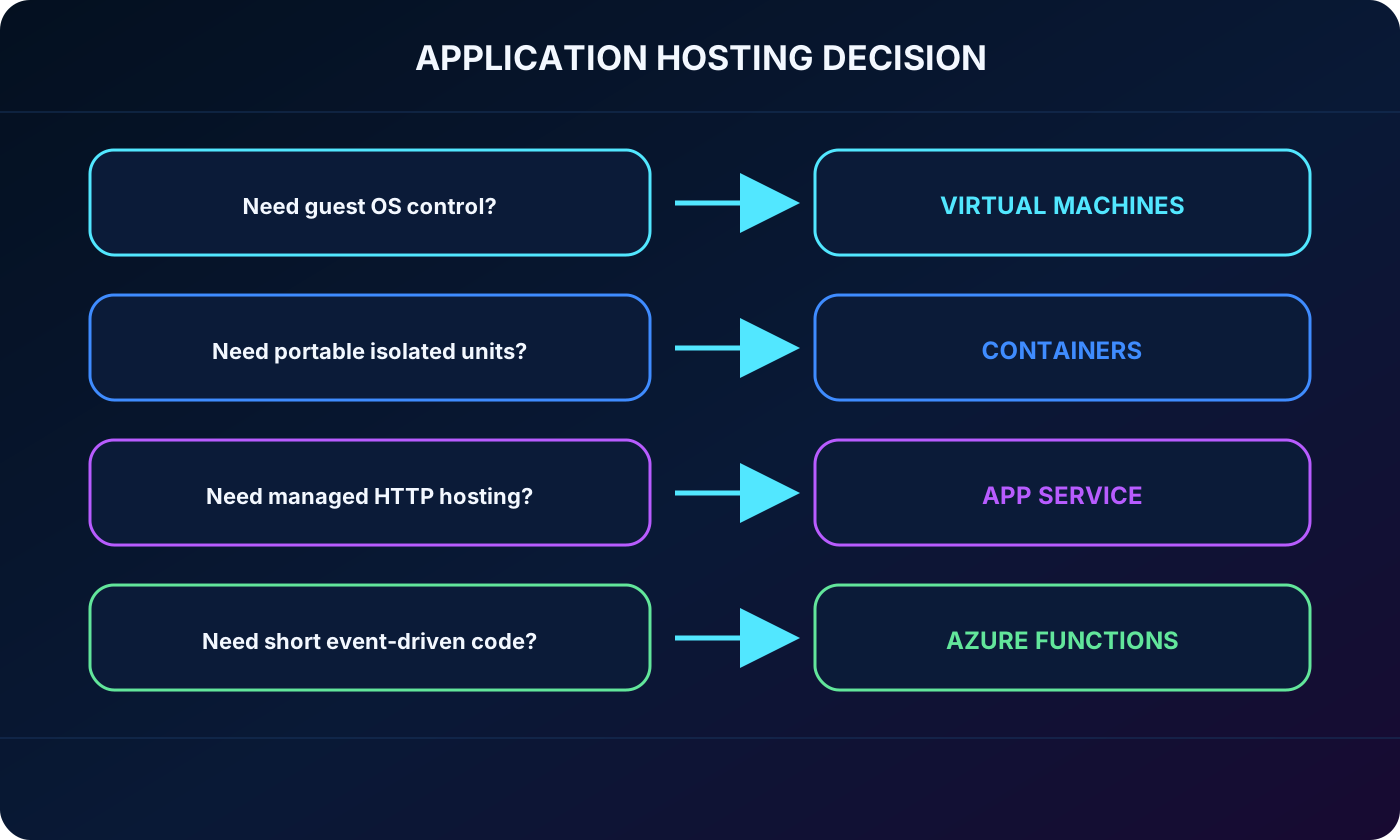
18. Choosing an application-hosting option
provide the most familiar server environment and complete OS control, but require the most administration. Containers provide isolated, portable application units and are a strong fit for microservices. provides a managed HTTP hosting platform when the team wants to deploy code without operating the underlying servers.
Hosting decision cues.
Requirement
Likely starting point
Custom operating system, drivers, or server software
Portable isolated components or Kubernetes ecosystem
Containers
Managed web application, REST API, mobile backend, or related job
Short event-driven code
Decision tree for , containers, , and .
19. platform capabilities
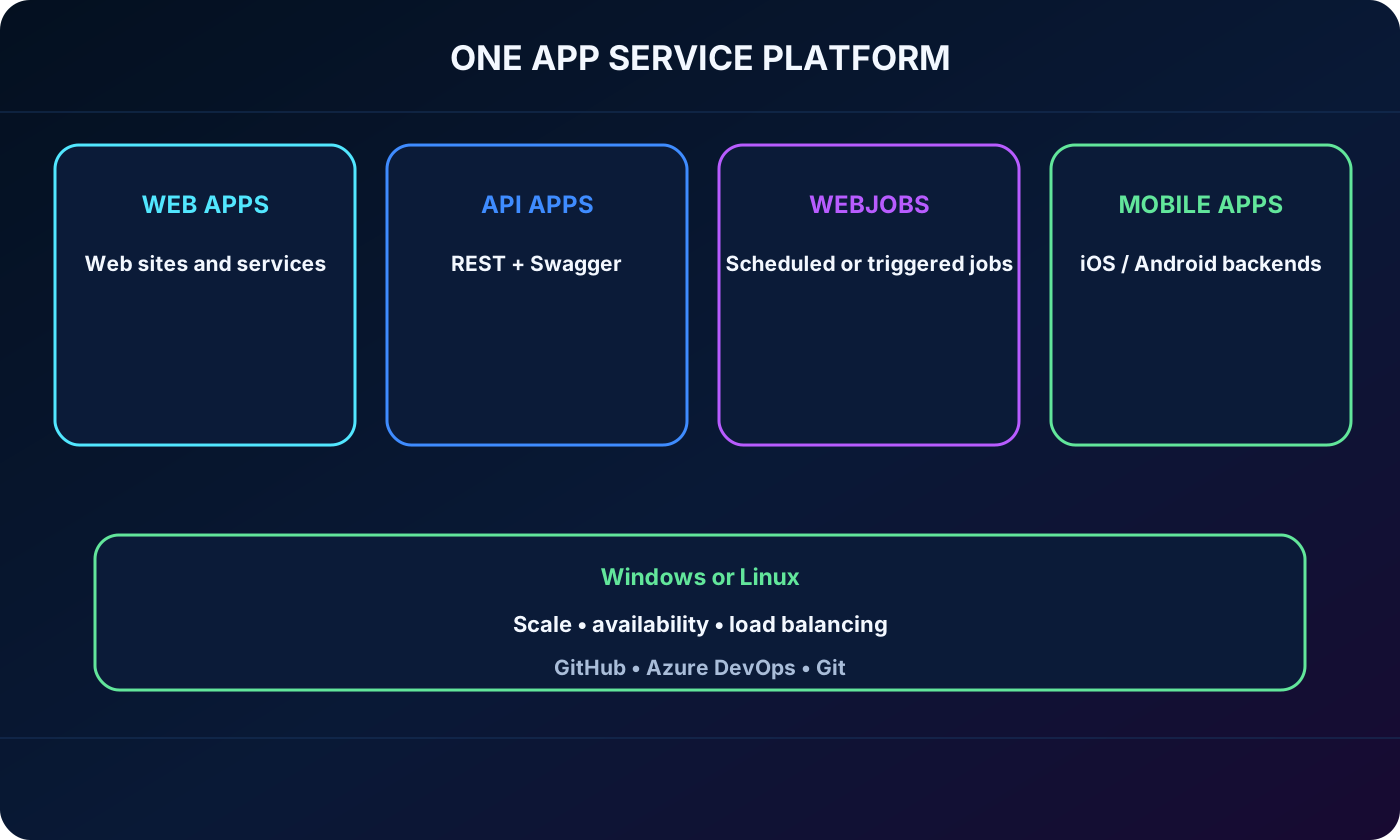
is a PaaS offering for web applications, REST APIs, mobile backends, and background jobs. It supplies managed Windows or Linux hosting, automatic scaling, high availability, secured endpoints, load balancing, and traffic-management capabilities without requiring customers to maintain the underlying infrastructure.
The platform supports .NET, .NET Core, Java, PHP, Python, Node.js, and other supported web stacks. Deployment can be automated from GitHub, , or another Git repository through continuous-delivery workflows.
20. Web Apps, API Apps, WebJobs, and Mobile Apps
Workloads delivered on infrastructure.
Workload
Purpose and capabilities
Web Apps
Host web applications on Windows or Linux with supported stacks including ASP.NET, ASP.NET Core, Java, Ruby, Node.js, PHP, and Python
API Apps
Build REST APIs in a chosen language or framework, publish Swagger descriptions, and serve any HTTP or HTTPS client; APIs can be packaged for Azure Marketplace
WebJobs
Run .exe, Java, PHP, Python, or Node.js programs and .cmd, .bat, PowerShell, or Bash scripts on a schedule or trigger in the application context
Mobile Apps
Provide iOS and Android backends with cloud SQL storage, push notifications, and authentication through Microsoft accounts, Google, X, or Facebook
Mobile backends can be written in C# or Node.js, with SDK support for native iOS and Android, Xamarin, and React Native. All four workload types use the same managed foundation and benefits.
hosting Web Apps, API Apps, WebJobs, and Mobile Apps on one managed platform.
21. Module assessment with explained answers
Paraphrased assessment.
Question
Correct answer
Why
How does an availability set reduce the effect of maintenance and hardware failure?
It distributes VMs across update and fault domains
Update domains separate planned restarts; fault domains separate shared power and network failure points.
Which service runs code in response to events without requiring server management?
It is Azure event-driven serverless compute.
Which service hosts web apps and APIs without exposing underlying infrastructure management?
It supplies a managed PaaS hosting environment.
Which category supplies ready-made language, speech, vision, and document APIs?
Azure AI services
These are prebuilt capabilities, whereas is aimed at custom-model development.
22. Chapter summary and Copilot practice
maximize control; scale sets add repeatable capacity; availability sets separate planned-maintenance and hardware-failure boundaries. centralizes Windows desktops and applications. Containers reduce per-instance overhead, with ,, and offering progressively richer platform and orchestration capabilities.
runs event-driven code, hosts managed HTTP workloads, Azure AI services provide prebuilt intelligence, supports custom models, and services connect cloud systems with devices and edge workloads.
The source module closes by inviting learners to continue with pay-as-you-go or a free Azure account whose trial period was described as 30 days. Offers, credits, eligibility, and durations can change, so confirm the current Azure account terms before creating resources.
Explore with Copilot Chat
Build a decision matrix for three workloads using , containers, , and ; justify control, scaling, and management tradeoffs.
Explain , availability sets, and Availability Zones through one capacity event, one planned update, and one datacenter failure.
Design a small architecture that combines a compute hosting option with one Azure AI, machine-learning, or IoT edge capability, and explain every selection.
Quiz me on the four assessment objectives above, then explain why each alternative is right or wrong.
23. Glossary and official references
Essential terms.
Term
Definition
Virtual Machine
Software-defined server whose guest OS and installed software are administered by the customer.
Scale set
Group of similarly configured virtual machines that can scale and receive balanced traffic.
Availability set
Logical VM grouping that distributes instances across update and fault domains within a region.
Container
Isolated application package that shares the host OS kernel rather than carrying a full guest OS.
Orchestration
Automated coordination of container deployment, scaling, health, and lifecycle.
Serverless
Execution model in which platform capacity is allocated around invocations and infrastructure is abstracted.
Agentic AI
Application pattern combining a model, instructions, context, tools, and logic for multistep goals.
Edge computing
Processing near devices or data sources to reduce latency, bandwidth use, or cloud dependency.
Managed Azure platform for HTTP applications, APIs, mobile backends, and jobs.