Responsibilities, control, operational effort, and use cases for infrastructure, platform, and software as a service
Suggested study time: 34 minutes • Beginner level • Aligned with the cloud concepts domain of AZ-900
By João Ricardo Dutra••Complete original content
1. Cloud service types and the purpose of this chapter
Cloud service types describe how responsibility is divided between a customer and a cloud provider. The choice affects how much freedom a team has to configure a workload, how much infrastructure it must operate, and how quickly it can deliver a usable solution.
Learning objectives
Describe infrastructure as a service (), platform as a service (), and software as a service ().
Explain how the boundary changes across the three service types.
Recognize the control, flexibility, and operational effort associated with each model.
Select an appropriate service type for common migration, development, analytics, communication, productivity, and finance scenarios.
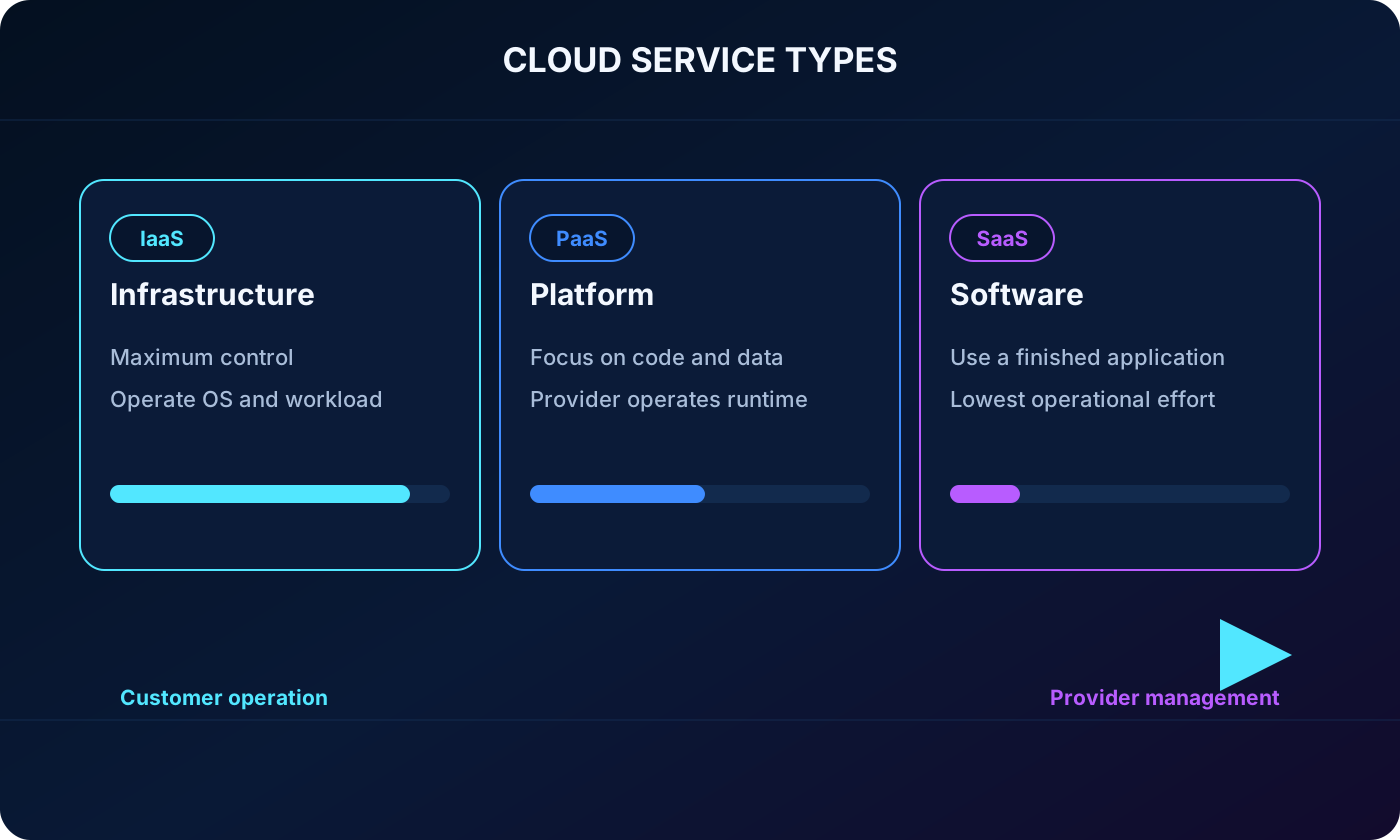
Cloud service spectrum from to and , showing decreasing customer operation and increasing provider management.
The models form a continuum rather than a quality ranking. is not automatically better because it offers more control, and is not automatically better because it is easier to consume. The right answer is the model whose responsibility boundary fits the workload and the organization.
2. Control, flexibility, and
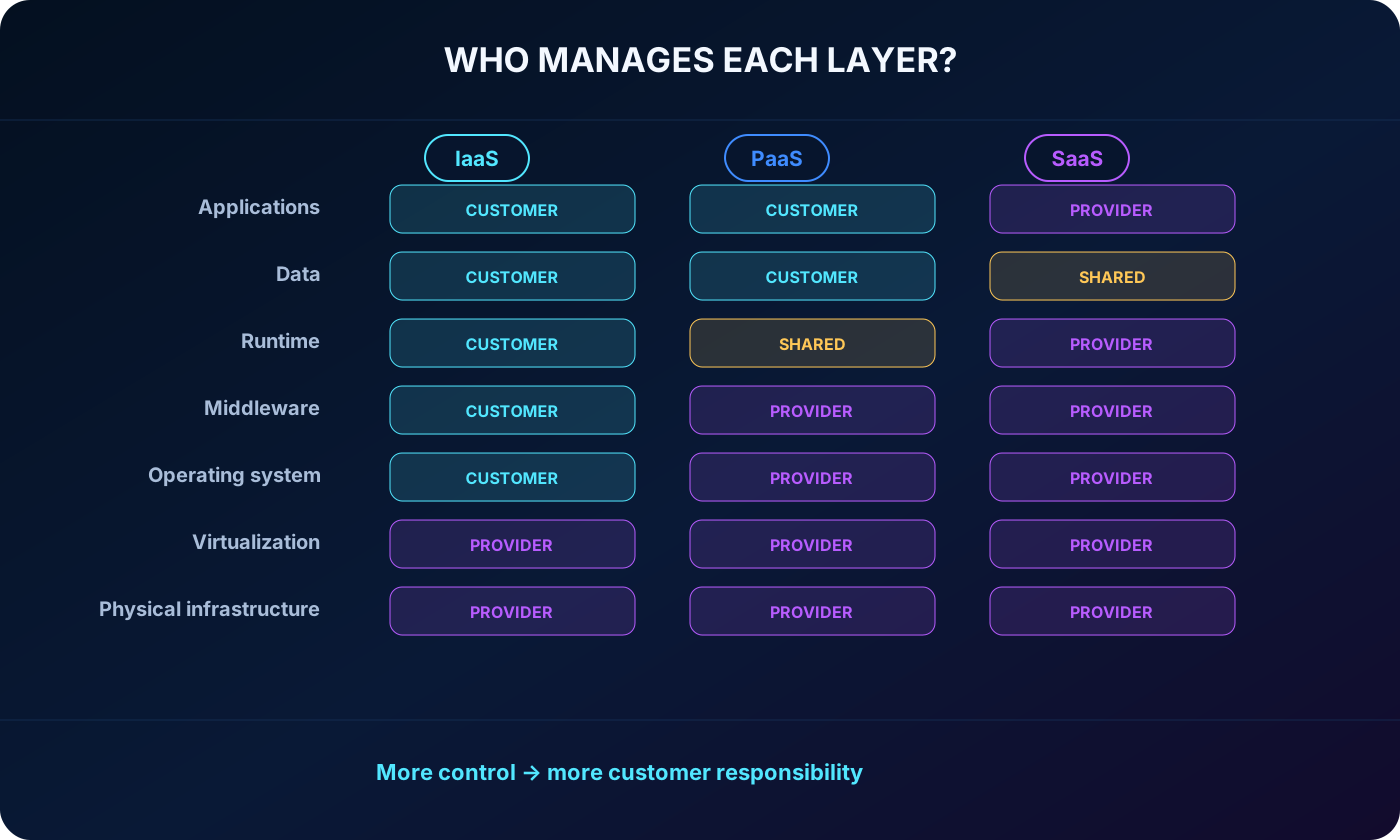
Every cloud model retains . The provider always protects and maintains the physical datacenter foundation. The customer always remains responsible for its data, identities, access decisions, and lawful use of the service. The layers between those endpoints move according to the service type.
Greater control normally brings more configuration choices and more operational work. Less direct control transfers patching, platform maintenance, and availability engineering to the provider, but the customer must still configure accounts, permissions, data handling, and the options exposed by the service.
Responsibility trend across cloud service types.
Service type
Customer emphasis
Provider emphasis
Operational profile
Applications, data, runtime, operating system, and many network controls
Physical hosts, datacenter network, facility, and internet connectivity
Maximum flexibility and highest customer operations
Application code, data, identities, and access settings
Infrastructure, operating system, ,, and platform tools
Balanced control and reduced platform maintenance
Data, users, identity, access, and
Infrastructure, platform, application, updates, and service availability
Fastest adoption and lowest customer operations
Responsibility stack comparing customer-managed and provider-managed layers for ,, and .
3. Infrastructure as a service ()
Infrastructure as a service provides virtualized computing infrastructure while leaving most workload decisions to the customer. It is comparable to renting hardware capacity in a cloud datacenter: the provider operates the physical environment, and the customer decides how the rented resources will be configured and used.
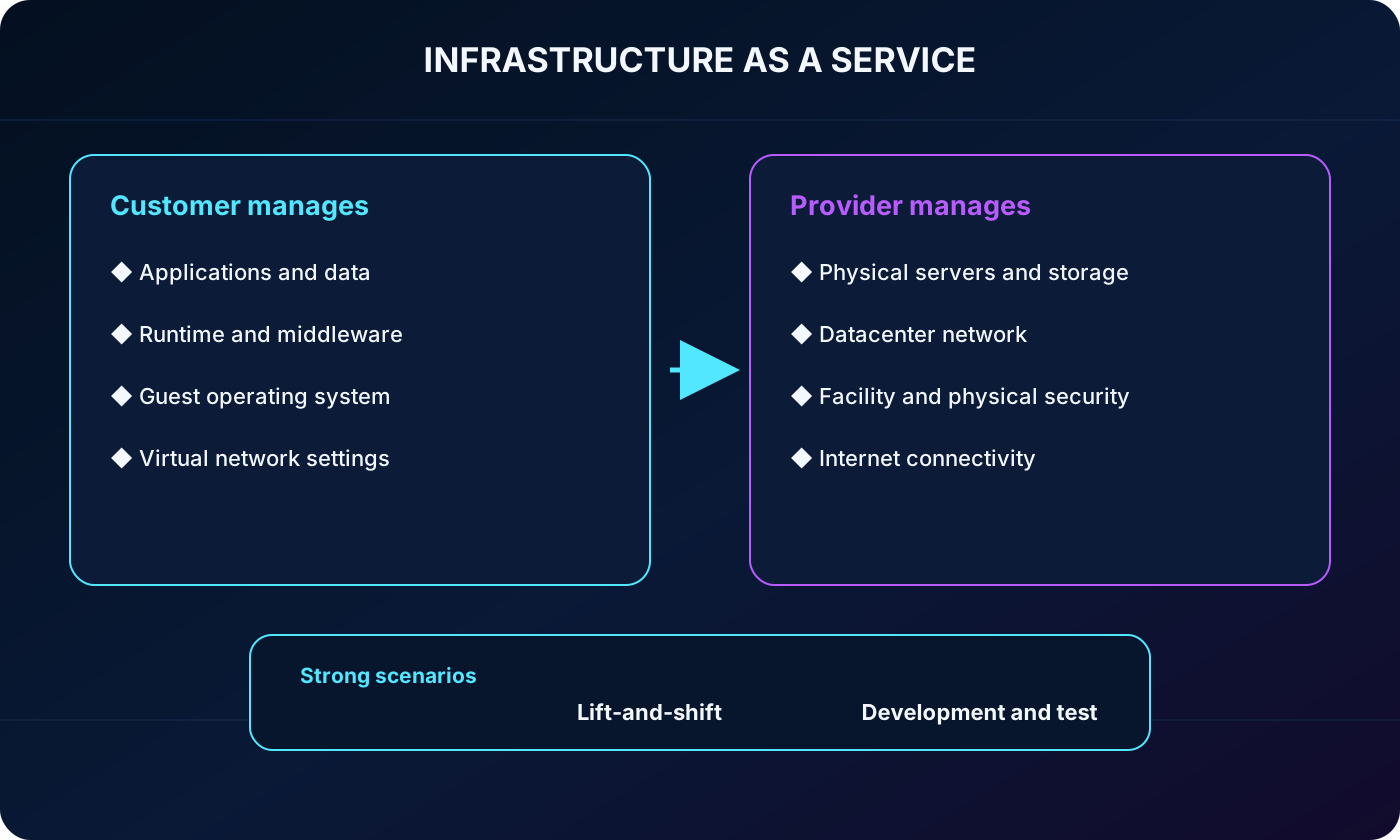
The provider maintains physical servers, storage hardware, the facility, physical security, and connectivity to the internet. The customer installs, configures, patches, and maintains guest operating systems; configures virtual networking; and manages databases, storage configuration, runtime components, applications, and data.
Choose when the workload requires operating-system-level access or specialized configuration.
Plan for patching, backup, monitoring, network protection, and recovery because those duties are not removed.
Treat flexibility as a responsibility: every configurable layer must be governed and maintained.
responsibility split with the customer operating the workload stack and the provider operating the physical cloud foundation.
4. When is a strong fit
migration
A migration recreates an environment similar to the existing on-premises datacenter and moves the workload with limited redesign. suits this approach because the team can preserve operating systems, installed software, and configuration patterns while replacing ownership of physical hardware with rented cloud infrastructure.
Development and testing
also works when teams must reproduce established configurations for development or test. Environments can be created and removed quickly without losing control of the operating system and software stack. Shutdown and deallocation policies remain important so temporary systems do not become permanent cost.
may be less attractive when the organization has no reason to manage operating systems or . In that case, the extra control can become undifferentiated maintenance rather than business value.
5. Platform as a service ()
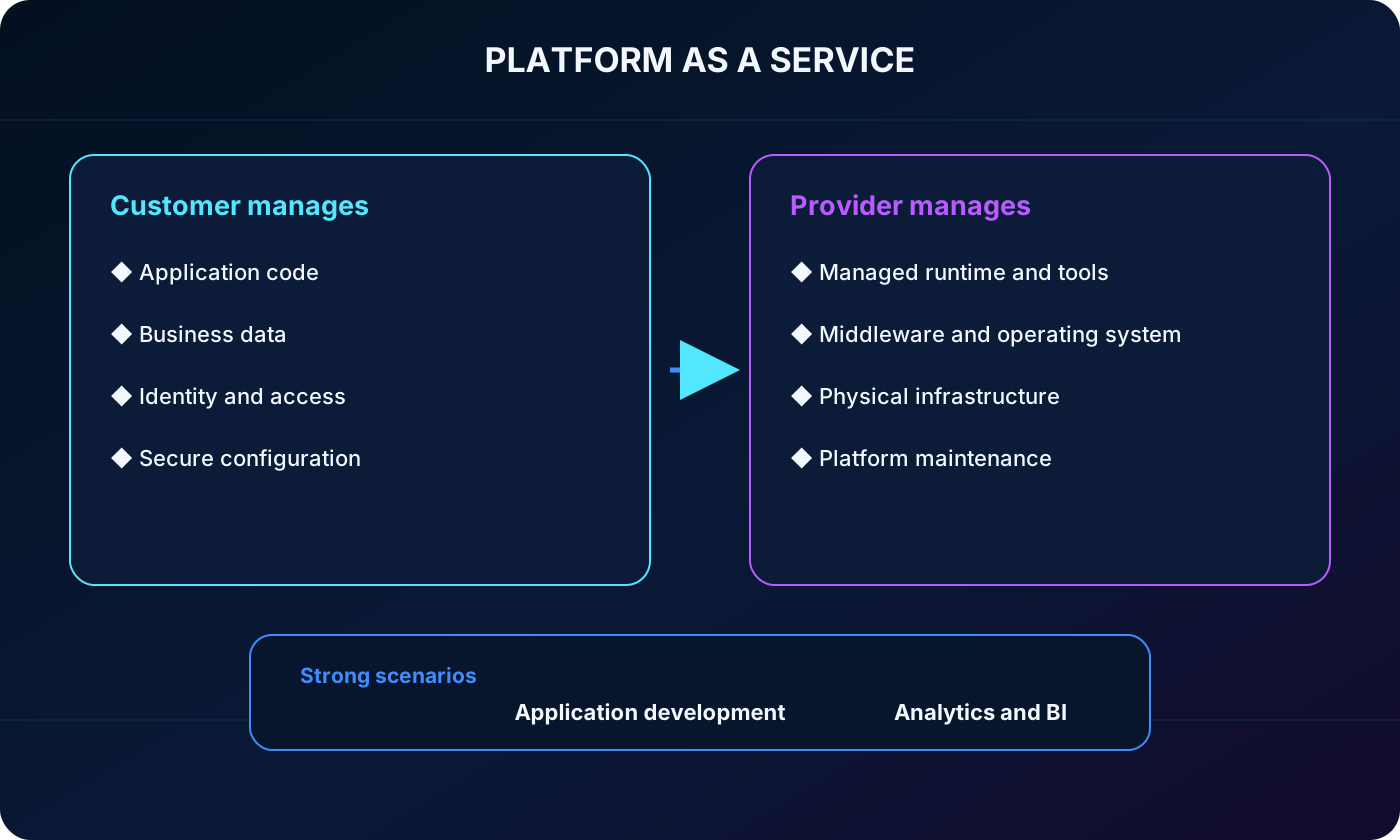
Platform as a service sits between infrastructure rental and a finished application. The provider operates the physical infrastructure and also maintains the operating system, , development tools, , and platform capabilities used by the solution.
The customer concentrates on application code, data, identities, and access controls. Depending on the service and its configuration, network and application-security settings can still be shared. removes the need to license and patch the underlying operating system and often removes database platform patching as well.
Use when delivering or modernizing an application is more important than administering its operating system.
Validate runtime, language, integration, networking, and portability requirements before choosing a platform.
Keep ownership of application security, data protection, identity, and secure configuration explicit.
responsibility split with the provider managing infrastructure and platform while the customer focuses on applications and data.
6. Development, analytics, and business intelligence with
Application development framework
offers a ready foundation on which developers can build or customize cloud applications. Built-in components and platform capabilities can provide scaling, high availability, and multitenant support, reducing how much common infrastructure code the team must create and operate.
Analytics and business intelligence
Analytics tools delivered as a platform can help teams ingest, analyze, and mine data, identify patterns, and forecast outcomes. The result supports planning and operational decisions while the provider maintains the underlying analytics platform.
is especially valuable when the platform’s supported architecture matches the application. If a legacy dependency requires unrestricted operating-system control, may be a better transitional choice.
7. Software as a service ()
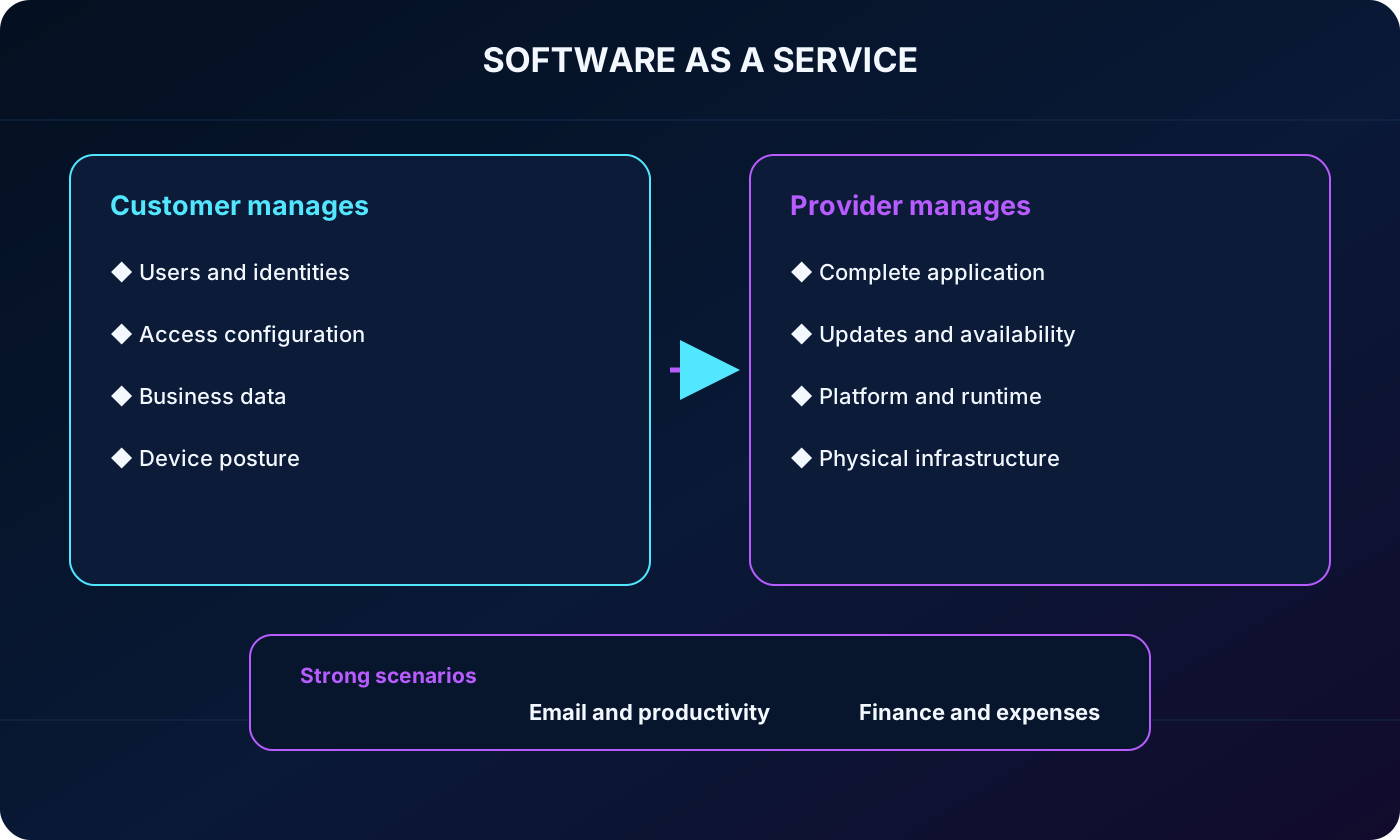
Software as a service delivers a complete application for customers to use. Instead of building or hosting the product, an organization subscribes to or consumes software that is already developed, deployed, updated, and operated by the provider.
normally offers the least infrastructure flexibility, but it is also the quickest model to adopt and requires the least platform expertise. The provider manages nearly the entire stack, including application maintenance. The customer primarily manages users, data, identities, access configuration, and the security posture of devices that connect to the service.
responsibility split with the provider managing the complete application stack and the customer managing data and access.
8. Common scenarios
is a natural fit when the business needs a standard capability rather than a custom hosting platform. Common categories include email and messaging, productivity applications, collaboration and connectivity tools, and finance or expense tracking.
A team using a hosted collaboration application can focus on onboarding users, assigning permissions, governing information, and configuring retention. The provider handles physical infrastructure, platform patches, application updates, and the service’s underlying availability.
Prefer when the available product meets the process without extensive custom engineering.
Evaluate data location, integration, identity, compliance, export, and retention requirements.
Do not confuse provider-managed software with provider-owned business data or access decisions.
9. Comparing ,, and
Practical comparison of the three cloud service types.
Decision factor
What is consumed?
Virtualized infrastructure
Managed application platform
Finished application
Customer control
Highest
Focused on code and data
Focused on configuration and use
Customer maintenance
Operating system through application
Application and data
Users, data, access, and devices
Typical speed to value
Depends on build and administration
Fast for application delivery
Fastest for standard business capability
Strong clue
or OS-level control
Build without platform maintenance
Use a ready-made business application
Moving from to to generally reduces the customer’s operational burden and direct control. It does not eliminate architecture, security, governance, or cost decisions; it changes where those decisions are made.
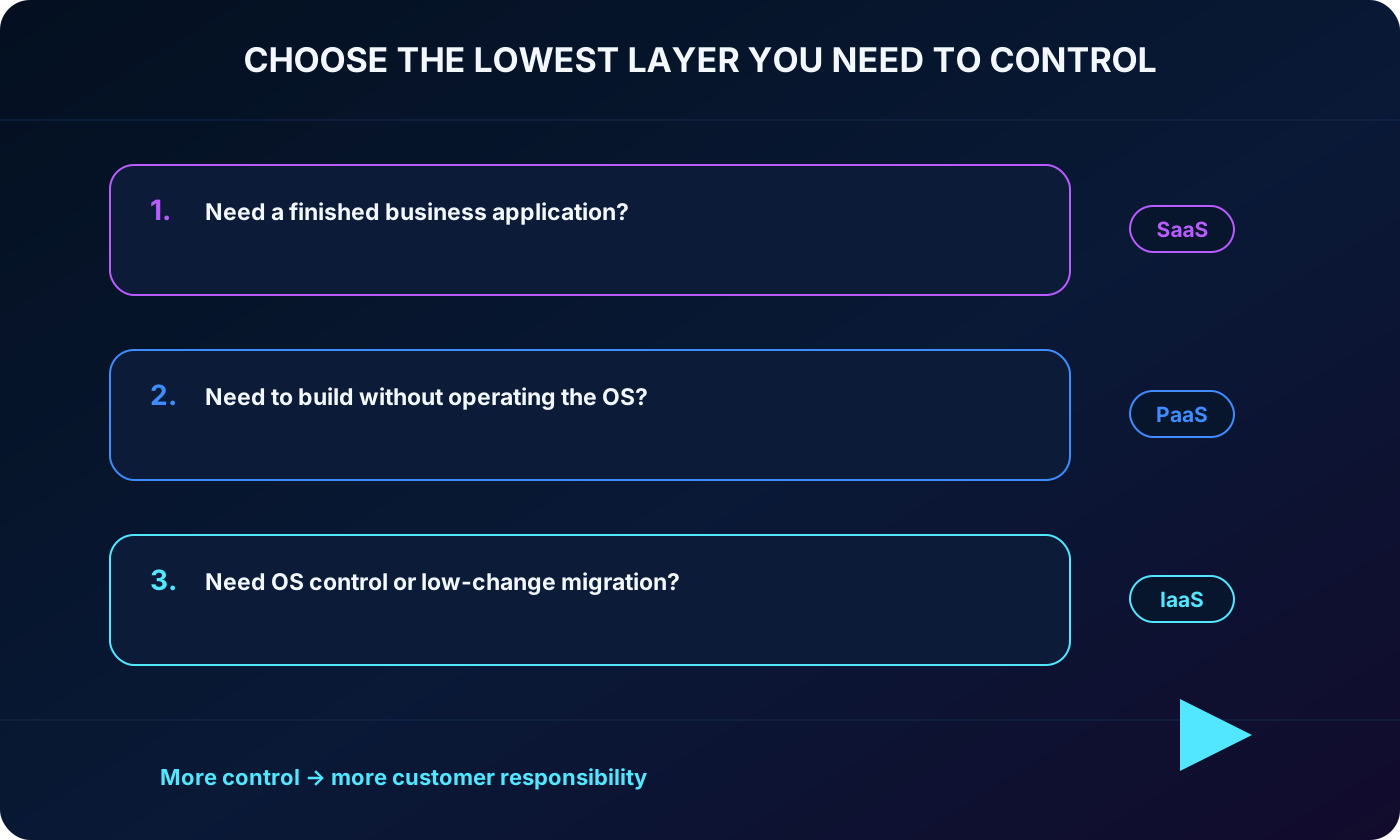
Decision guide for choosing ,, or based on operating-system control, application development, or use of finished software.
10. A decision method for choosing the service type
Start with the business outcome, then identify the lowest layer that genuinely needs customer control. Choosing more control than necessary creates maintenance; choosing less control than required can block technical or regulatory needs.
Is a finished application available that meets the process and governance requirements? Consider .
Must the team build or customize an application, but not administer the operating system? Consider .
Does the workload require guest operating-system access, a specialized runtime, or a low-change migration? Consider .
For every option, record who patches, monitors, backs up, secures, scales, and recovers each layer.
Reassess the model as the workload evolves; a migration may begin in and later adopt managed platforms or software.
11. Scenario review and knowledge check
Paraphrased knowledge check with explained answers.
Scenario
Best answer
Why
An established datacenter workload must move quickly while preserving its operating system and configuration.
needs infrastructure control and minimizes immediate redesign.
Employees need a ready finance and expense application without building or maintaining it.
The organization consumes a finished business application.
Developers need managed runtimes, built-in scaling, and no operating-system patching.
The provider operates the platform while developers focus on code and data.
A test team must reproduce a custom server image and remove the environment after each cycle.
The team needs OS-level control and rapidly disposable infrastructure.
Analysts need a managed platform to find patterns and forecast outcomes from organizational data.
Analytics capabilities are provided without the team maintaining the underlying platform.
12. Chapter summary
supplies infrastructure and the greatest configuration freedom. The provider maintains the physical foundation; the customer operates the and most of the workload stack. migration and controlled development environments are common fits.
supplies a managed platform. The provider also maintains operating systems, , tools, and runtimes, allowing the customer to focus on applications and data. Application development, analytics, and business intelligence are common fits.
supplies a complete application. It minimizes customer operations and speeds adoption, while the customer still controls users, data, identities, permissions, and device access. Email, productivity, collaboration, finance, and expense applications are common fits.
More customer control means more customer responsibility.
Provider management reduces maintenance but never removes customer accountability for data and access.
Select the service type from workload requirements, not from a universal preference.
13. Explore with Copilot Chat
Use Copilot Chat to practice tradeoffs, then validate its answer against the responsibility matrix and official references.
For one application portfolio, choose ,, or for each workload and explain the responsibility tradeoffs.
Show how patching, security, scaling, and recovery responsibilities change when a workload moves from to .
Create a short scenario quiz about cloud service types and explain why each selected model fits.
14. Essential glossary
Key terms for this AZ-900 objective.
Term
Definition
Cloud model that provides virtualized infrastructure while the customer operates most workload layers.
Cloud model that provides a managed application platform while the customer focuses on code and data.
Cloud model that delivers a complete provider-operated application.
Division of security, maintenance, and operational duties between provider and customer.
Operating system inside a customer-managed virtual machine.
Software services between the operating system and application code.
Provider-operated execution environment for application code.
Migration that moves a workload with limited redesign to similar cloud infrastructure.
Architecture in which one service securely supports multiple customers or tenants.
Security and compliance condition of a device that accesses a service.
15. Official references
These Microsoft Learn pages confirm the module objectives, responsibility boundaries, scenarios, and current terminology.