Database, engineering, analytics, and AI roles; PaaS and SaaS; Azure SQL, storage, integration, Microsoft Fabric, real-time analytics, governance, BI, and AI services
Suggested study time: 85 minutes • Beginner level • Aligned with the DP-900 study guide and official Microsoft Learn documentation
By João Ricardo Dutra••Complete material
1. Why data roles and services matter
The volume and variety of data produced by applications, devices, and business processes continue to grow. Organizations therefore divide data work into specialties: operating databases, integrating data, interpreting it, governing it, and building intelligent experiences. Clear ownership reduces operational gaps and helps teams select technology according to the workload instead of according to familiarity alone.
Role names are not universal. A small team may combine several responsibilities in one person, while a large enterprise may separate them into specialized groups. The DP-900 exam focuses on the recurring responsibilities behind the titles and on the service categories those responsibilities require.
Topic summary
Understand the responsibility first, then associate it with the service category that fulfills it.
2. Four core roles and how they collaborate
Role
Primary outcome
Typical collaborators
Database administrator
Available, secure, and well-performing databases
Application teams and data engineers
Data engineer
Reliable data movement, cleansing, transformation, and analytical stores
Database administrators, analysts, and AI engineers
Data analyst
Models, reports, visualizations, and business insights
Business stakeholders and data engineers
AI engineer
Responsible AI features and intelligent workflows
Data engineers, analysts, and application developers
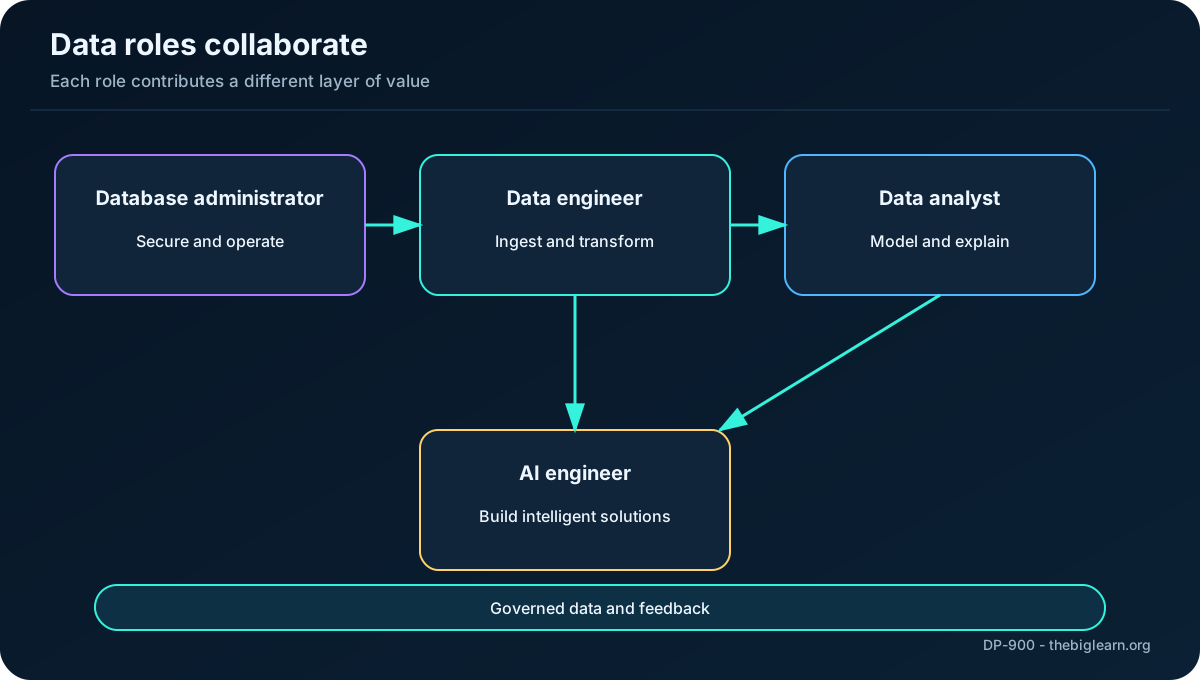
Figure 1 - Data work is collaborative: each role produces an outcome that another role can consume.
The boundaries are intentionally permeable. A database administrator may provision an operational database and then act as a data engineer to move its records into a data warehouse. Likewise, an analyst may validate a semantic model while an AI engineer incorporates its results into an application.
Topic summary
The roles are differentiated by their main outcome, but practical solutions depend on collaboration and sometimes shared ownership.
3. Database administrator responsibilities
A database administrator designs, implements, maintains, and operates database systems on-premises and in the cloud. The role protects availability and consistent performance through configuration, monitoring, tuning, capacity planning, backups, and recovery. Disaster recovery plans must cover both natural events and human mistakes.
Security is equally important. The administrator grants or denies access, assigns privileges, applies policies, and keeps recovery copies protected. AI assistance can draft queries or help investigate performance symptoms in natural language, but approval, risk assessment, and operational judgment remain human responsibilities.
Topic summary
Database administrators keep database platforms available, secure, recoverable, and performant.
4. Data engineer responsibilities
A data engineer works with stakeholders to design and implement ingestion pipelines, cleansing and transformation routines, and storage for analytical workloads. The role spans relational and nonrelational databases, file stores, and streams, so architectural choices are driven by data shape, scale, latency, and consumer needs.
Engineers operate and monitor pipelines so data arrives when expected and with the required quality. They also protect privacy across hybrid paths from on-premises systems to cloud stores and apply governance rules during movement. AI tools can propose transformation code and configurations, but the engineer remains accountable for architecture, privacy, and quality.
Topic summary
Data engineers turn distributed source data into reliable, governed, and analysis-ready data products.
5. Data analyst responsibilities
A data analyst converts raw data into relevant business insight. The role explores trends and relationships, translates requirements into analytical models, defines calculations, and communicates findings through reports, dashboards, and visualizations. Business context matters because technically correct analysis can still be irrelevant if it answers the wrong question.
AI assistance can summarize a report, suggest a visual, generate analytical expressions, or create a narrative. The analyst still validates the result, selects the right comparison, explains uncertainty, and communicates an actionable conclusion to stakeholders.
Topic summary
Data analysts connect data to decisions through models, measures, visualizations, and clear business communication.
6. AI engineer responsibilities
An AI engineer builds and integrates AI-powered capabilities into applications and data workflows. The role works with large language models, machine learning pipelines, and enterprise data sources to deliver scenarios such as chat over organizational data, content generation, and automated classification.
AI engineers depend on data engineers for prepared and governed data and collaborate with analysts when AI-generated insights appear in reports or applications. Their daily work can include generating code, evaluating models, explaining behavior, and proposing architectures. Human responsibility remains essential for design decisions, evaluation, safety, and responsible deployment.
Topic summary
AI engineers combine models, data, evaluation, and application integration to deliver responsible intelligent experiences.
7. Additional roles and shared accountability
The four roles are a useful foundation rather than a complete organization chart. Data scientists experiment with statistical and machine learning models; data architects define cross-platform structures and standards; application developers and software engineers create systems that produce and consume data. Security, compliance, and business teams also influence requirements.
A role describes a set of responsibilities, not necessarily one employee. Separating duties clarifies accountability, while collaboration prevents local optimization from damaging the end-to-end solution.
Topic summary
Use roles as responsibility boundaries, while recognizing that organizations may combine, rename, or further specialize them.
8. Choosing services and understanding PaaS and SaaS
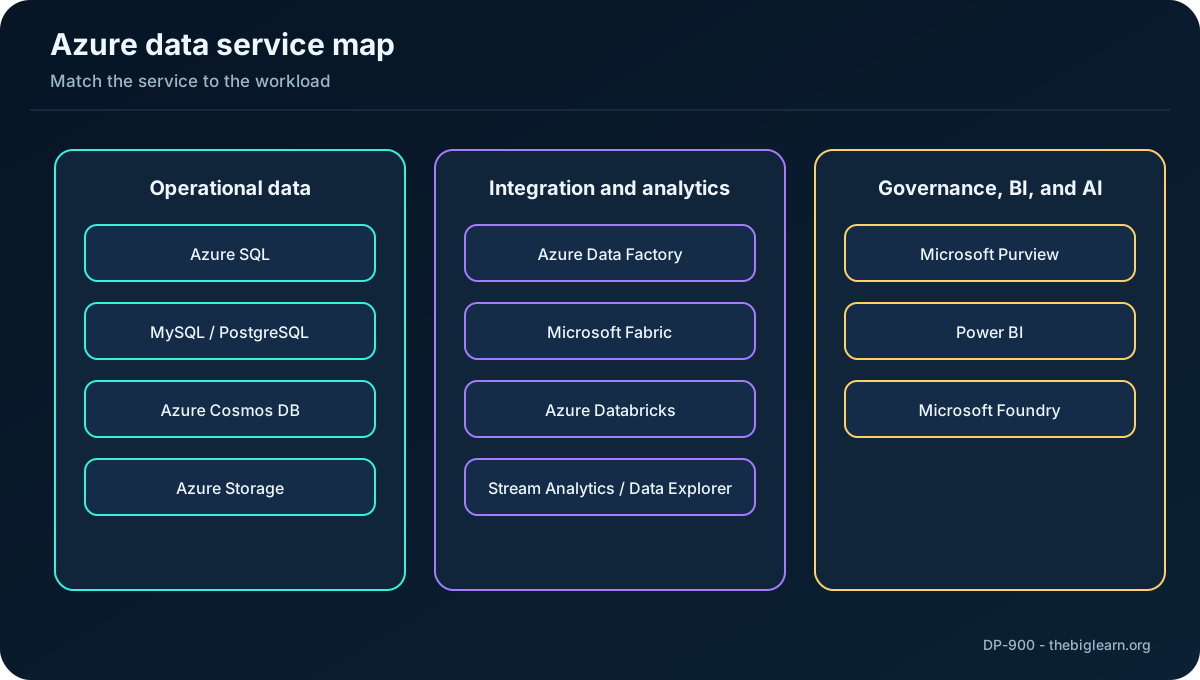
Azure offers many data services for operational and analytical workloads. Beginners do not need to memorize the entire catalog; they should recognize the workload category, the degree of control required, and which role typically operates or consumes the service.
Delivery model
Microsoft manages
Customer focuses on
PaaS
Servers, core infrastructure, patching, and much of platform maintenance
Data, configuration, security choices, and applications
SaaS
The complete ready-to-use product and its infrastructure
Workspaces, content, governance, and business use
Figure 2 - Begin with the workload category, then choose the service and delivery model.
Topic summary
PaaS reduces infrastructure work; SaaS delivers a complete product. In both models, customers retain responsibility for their data and configuration choices.
9. family and the responsibility spectrum
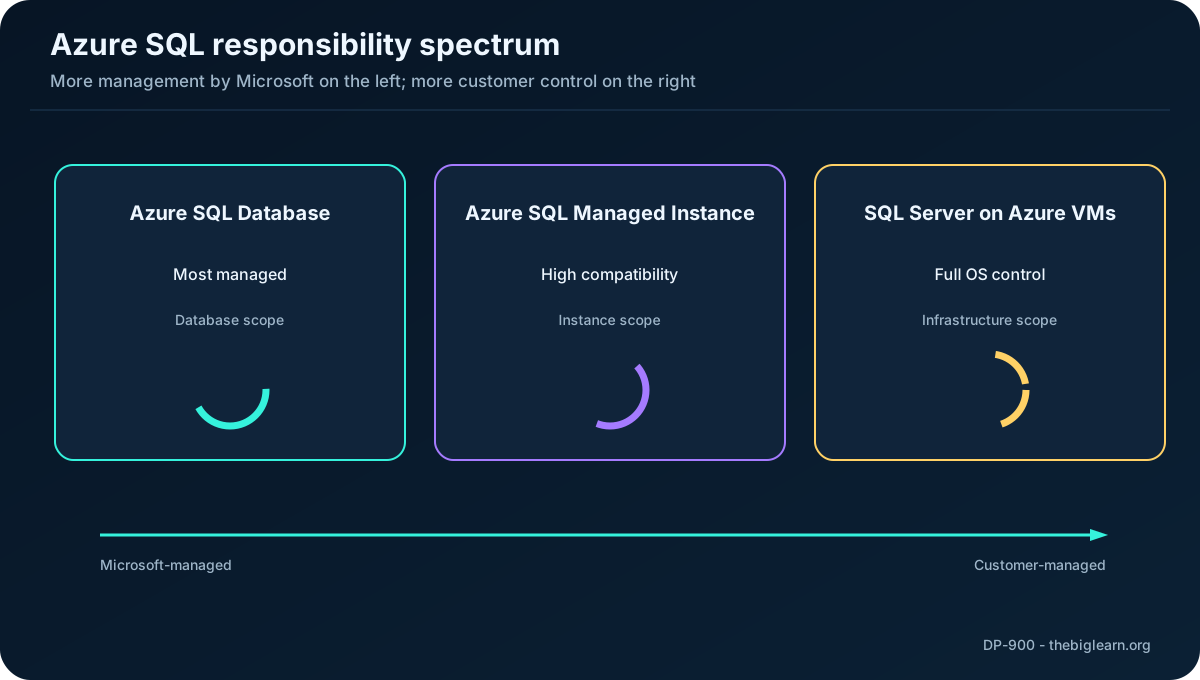
is the collective name for relational services based on the Microsoft SQL Server engine. is a fully managed PaaS database. provides a hosted SQL Server instance with automated maintenance and broader instance-level compatibility, along with more configuration responsibility. offers maximum operating-system and database-engine control, but the customer manages the virtual machine and SQL Server installation.
Database administrators provision and operate these systems for line-of-business applications that store transactional data. Data engineers use them as pipeline sources, and analysts may query them directly for smaller reports. Enterprise analytics usually combines their data with other sources in an analytical store. Built-in AI features can help generate queries and investigate performance through natural language.
Topic summary
Choose among the options by balancing compatibility and control against the amount of administration the team wants to own.
10. Managed open-source relational databases
Azure also provides managed relational services for widely used open-source engines. is common in applications built with the Linux, Apache, MySQL, and PHP stack. supports relational tables as well as custom data types with object-relational and nonrelational characteristics.
Database administrators manage availability, security, and performance for transactional applications. Data engineers consume these databases as pipeline sources, and analysts may use their data directly or after it has been consolidated in an analytical platform.
Topic summary
Managed MySQL and PostgreSQL services preserve familiar open-source engines while reducing infrastructure administration.
11. for globally distributed NoSQL data
is a globally distributed nonrelational database designed for scalable and highly available applications. Its APIs support multiple data models, including JSON documents, key-value pairs, column-family data, and graphs. This flexibility makes it suitable when application access patterns do not fit a fixed relational schema.
A database administrator may manage the service, but application developers often own NoSQL design as part of the application architecture. Data engineers integrate Cosmos DB records into analytical solutions, and analysts consume the resulting models and reports. Natural-language AI capabilities can assist with exploration and queries.
Topic summary
Use when an application needs globally distributed, highly available NoSQL storage across supported data models.
12. Azure and data lakes
Azure is a foundational cloud storage service. Blob containers provide scalable, economical storage for binary objects; file shares expose network file shares; and tables provide fast key-value storage for applications.
Data engineers use blob storage with a hierarchical namespace to build data lakes. The namespace organizes files into directories within a distributed file system, allowing large analytical engines to process data while preserving a familiar folder structure.
Topic summary
Azure covers objects, shared files, and key-value tables; hierarchical blob storage can serve as a data lake.
13. and Fabric Data Factory
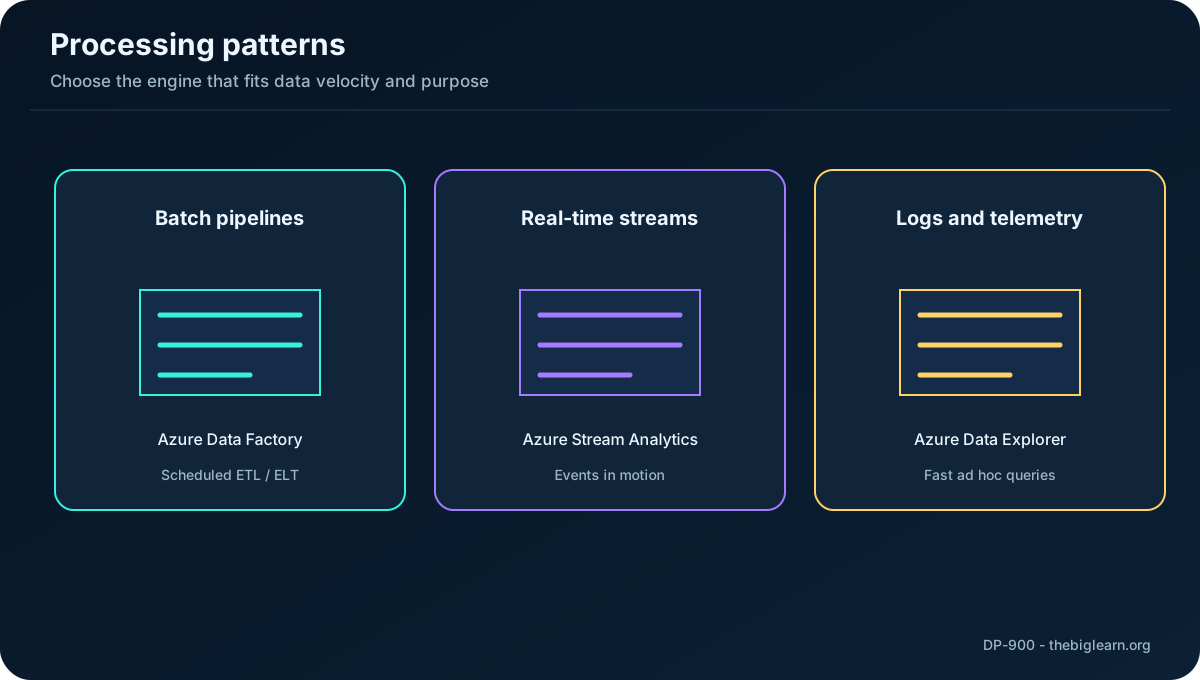
defines and schedules pipelines that move and transform data. A pipeline can read from cloud or on-premises sources, invoke cloud compute for processing, and persist the result in another store. Data engineers use it to implement ETL solutions that populate analytical repositories from transactional systems.
Fabric Data Factory brings Data Factory capabilities into . It is the natural choice when ingestion, transformation, storage, analytics, and reporting all belong to the same Fabric solution and workspace. remains useful for broader Azure integration and standalone orchestration patterns.
Topic summary
Data Factory orchestrates repeatable data movement and transformation; choose the Fabric experience for an integrated Fabric analytics solution.
14. and OneLake
is a unified SaaS analytics platform. It combines data engineering, data warehousing, real-time analytics, data science, databases, governance, and in browser-based workspaces. Microsoft operates the infrastructure, so teams create and govern items rather than administering servers or clusters.
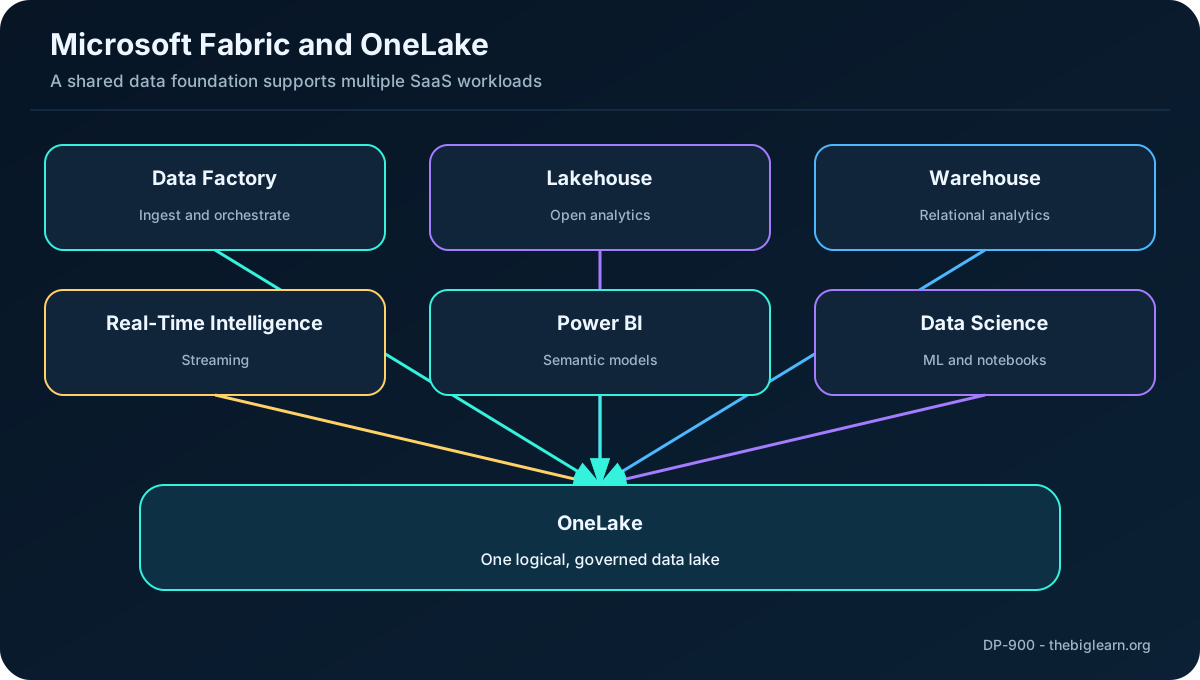
OneLake is the shared logical data lake underneath Fabric. A common storage layer reduces unnecessary copies and lets multiple workloads work with the same governed data. Engineers can build an end-to-end solution that joins pipelines, lakehouses, warehouses, streaming, business intelligence, and AI-powered insight.
Figure 4 - Fabric unifies analytical experiences above one shared logical data lake.
Topic summary
provides integrated SaaS analytics, and OneLake supplies a shared storage foundation for its workloads.
15. Fabric workloads, natural-language assistance, and Fabric IQ
Fabric Data Factory handles ingestion and ETL; Fabric Lakehouse supports lakehouse analytics; Fabric Warehouse supports relational warehouse analysis; Real-Time Intelligence handles streaming; delivers visualization; and Fabric also includes data science, machine learning, SQL databases, Cosmos DB in Fabric, and governance capabilities.
Built-in AI assistance can help create pipelines, write SQL, generate notebook code, and explore data using natural language. IQ adds a shared business vocabulary over data in OneLake so tools, teams, business users, and AI agents interpret entities such as Customer, Order, or Product consistently. Fabric IQ is currently a preview capability, so its behavior and availability can evolve.
Topic summary
Fabric workloads cover the analytics lifecycle; IQ adds shared business meaning and natural-language access over OneLake data.
16. and semantic models
is Microsoft’s business intelligence and data visualization platform. Analysts connect to sources, create interactive reports and dashboards, and distribute insight. It is available as a standalone service and as an integrated Fabric workload alongside engineering and warehouse items.
In Fabric, commonly accesses data through semantic models: governed analytical layers that define measures, relationships, hierarchies, and business logic. AI features can summarize reports, recommend visualizations, generate DAX measures, and produce written narratives, subject to analyst validation.
Topic summary
turns governed models into interactive analysis, while semantic models keep calculations and business definitions consistent.
17. for code-first lakehouse analytics
is a managed cloud analytics platform built on Apache Spark. It supports large-scale data engineering, data science, and SQL analytics over open lakehouse formats, especially Delta Lake. It runs inside an Azure subscription and suits teams that prefer Spark, notebooks, and code-first workflows.
Data engineers create analytical stores and pipelines with existing Spark skills. Analysts can query and visualize data in web notebooks. AI assistance can generate Spark code and SQL and explain complex notebook logic, while the team remains responsible for correctness and operational design.
Topic summary
is the managed Spark and notebook option for large-scale engineering, data science, and open lakehouse workloads.
18. pipelines, stream processing, and telemetry analytics
Service
Processing pattern
Representative use
Scheduled or event-driven batch orchestration
Move and transform data between stores
Continuous real-time stream processing
Read an input stream, query it, and write an output
High-performance log and telemetry analytics
Query timestamped logs and IoT telemetry
Figure 5 - Latency and data shape help distinguish orchestration, stream processing, and telemetry exploration.
can feed a real-time visualization or ingest processed events into an analytical store. is a standalone, fully managed big-data analytics platform optimized for fast queries over logs and telemetry, where timestamp attributes are especially common.
Topic summary
Use Data Factory for pipeline orchestration, Stream Analytics for continuous event processing, and Data Explorer for high-speed log and telemetry investigation.
19. for governance and discoverability
supports enterprise-wide data governance and discovery. Teams can map data across sources, classify sensitive information, follow lineage between systems, and help analysts locate trustworthy data. These capabilities make policy enforcement and impact analysis possible across platforms rather than inside a single database.
Data engineers use Purview to apply governance and protect the integrity of information feeding analytical workloads. Classification and sensitivity labels help organizations maintain controls across regions and platforms; lineage identifies how data moved and changed. Purview does not replace backups or a real-time synchronization service.
Topic summary
makes data discoverable and governed through mapping, classification, sensitivity information, and cross-system lineage.
20. for enterprise AI solutions
is Microsoft’s unified Azure PaaS for enterprise AI operations, model builders, and intelligent application development. It provides model access, tooling, evaluation capabilities, and infrastructure for designing, testing, and deploying AI solutions.
AI engineers and developers use it for chat-over-your-data applications, multi-agent workflows, and automated AI pipelines that integrate with Azure data services. Prepared data, access control, evaluation, monitoring, and responsible deployment remain essential parts of the solution.
Topic summary
supplies the managed platform and tools used to build, evaluate, and deploy enterprise AI experiences connected to organizational data.
21. Role-to-service decision matrix
Requirement
Primary role
Likely service
Operate and recover a relational database
Database administrator
family or managed open-source database
Integrate and transform enterprise sources
Data engineer
or Fabric Data Factory
Create reports and business measures
Data analyst
and semantic models
Build a globally distributed NoSQL application
Developer or database administrator
Process a continuous event stream
Data engineer
Analyze timestamped telemetry
Data analyst or data engineer
Map lineage and sensitive data
Data engineer or governance team
Build a grounded AI application
AI engineer
with governed data sources
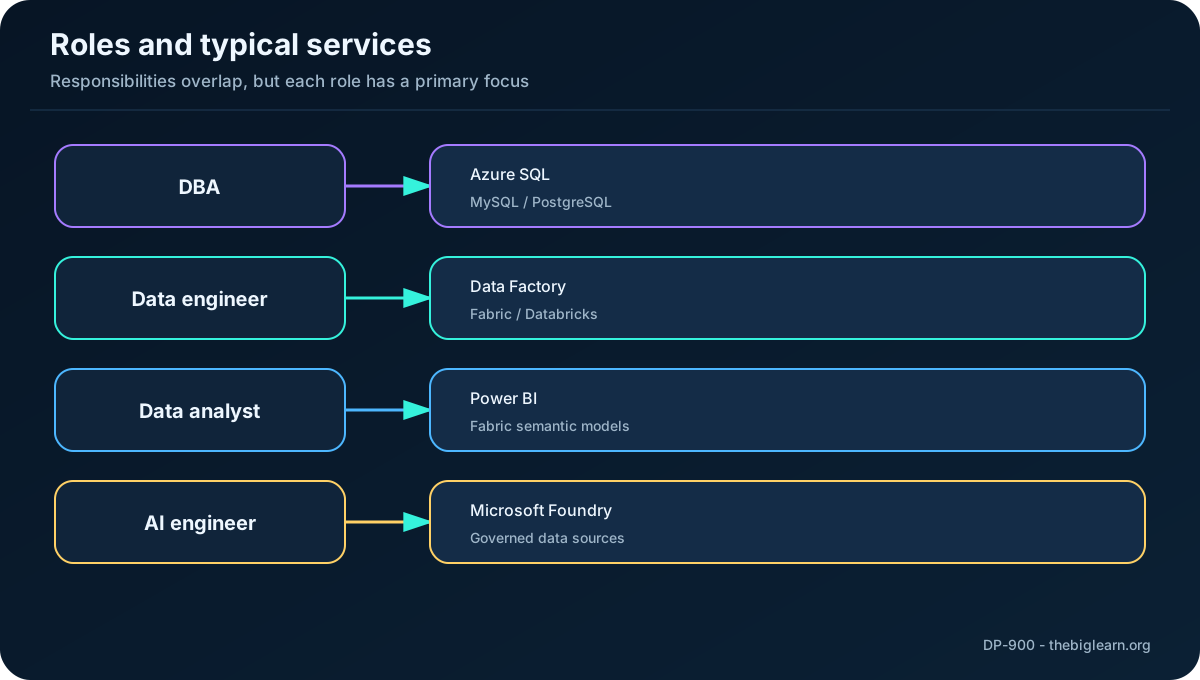
Figure 6 - A service can support several roles, but each role approaches it with a different responsibility.
Topic summary
Match the business requirement to a role outcome and workload pattern before selecting a service.
22. Assessment review and exam reasoning
The module assessment tests responsibility and service selection rather than command syntax. The following reasoning patterns cover all nine scenarios without reproducing the original questions.
Ingestion pipeline design belongs primarily to the data engineer; database security, availability, and performance belong primarily to the database administrator.
For full control of a SQL Server installation and its operating environment, select ; is an integration service, not a database host.
Creating reports and visualizations is central to the data analyst role, while ingestion architecture and ETL are data engineering concerns.
Integrating sources and operating ETL processes is a data engineering responsibility; configuring backups is database administration.
For large daily transformations across cloud and on-premises systems, is the pipeline service among the listed options.
supports regulation-driven control by classifying and monitoring sensitive data.
Purview lineage tracks data across sources and transformations, helping teams protect integrity and understand impact.
Classification and sensitivity labels maintain governance context across platforms; frequent deletion does not establish integrity.
is the globally distributed, highly available NoSQL choice among ,, and .
Topic summary
For DP-900 questions, identify the workload verb—operate, integrate, analyze, govern, stream, or build AI—and eliminate services from the wrong category.
Final chapter recap
Database administrators operate and protect databases. Data engineers integrate, transform, and govern data. Data analysts model and communicate insight. AI engineers build responsible intelligent features. , open-source managed databases, , and Azure provide operational foundations; Data Factory, Fabric, Databricks, Stream Analytics, and Data Explorer process and analyze information; communicates it; Purview governs it; and Foundry enables enterprise AI solutions grounded in that data.